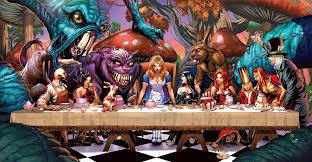
Grimm Fairy Tales Presents Alice in Wonderland #1 Released January 25th Artwork by Artgerm, Eric Basaldua and Nei Ruffino.  32 pages

Paperback: 168 pages
Publisher: Zenescope (January 22, 2013)
Language: English
ISBN-10: 1937068668

Decades ago, a girl named Alice was sacrificed into the horror-filled realm of Wonderland but her terrifying and awe-inspiring experiences there have been shrouded in mystery. The one thing known is that her time spent in a world full of insanity left her a broken adult. However, her courageous will to survive is what ultimately saved humanity. Now the story of Alice’s visit into Wonderland is fully revealed and the truth of the terror will be told in full! From Raven Gregory, Ralph Tedesco and Joe Brusha, the same minds behind Grimm Fairy Tales and Return To Wonderland comes the newest series that Zenescope fans have been waiting for. What every Zenescope fan has been waiting for is finally here! Follow Zenescope back down the rabbit hole and find a world of madness like you have never seen before!


In a dark twist to an already unusual story, this graphic novel tells a story of a young  Alice who is coaxed into the Real of Dreams by her grandparents. Alice has become a slave to the evil and grotesque Jabberwocky. In Vol 1 we see Alice as a young woman who with some help, escapes the Jabberwocky and has several encounters with the people/creatures of Wonderland. The Chesire Cat is chasing after her to return her to her master and Alice is stuck in a land of terror.
Throughout the story we get flashbacks of how Alice came to be in Wonderland and what is happening in the real world. As she travels through Wonderland, and encounters different people, she soon comes to realise that she has to conquer the Jabberwocky to ever really be free of him.
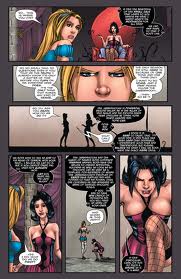
As with all comics, this one was a very fast paced adventure, introduced to us with a Grimm twist. There is no down-time as Alice is in a race for her life.

With full colored  pages, a more risque, adult version of Alice and horrific landscape, this comic is a view into a twisted and terrifying side of Wonderland. Most of the storytelling is done through the art work and visuals to accentuate the creep-factor of the characters and lands she travels through. (There are no fluffy white bunnies or flowers in this version!) It has a good balance between dialogue/story telling and really focuses on the artwork to reveal the  majority of the story.

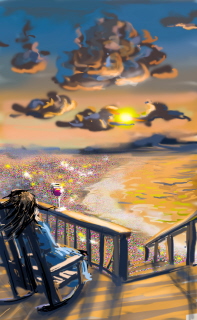
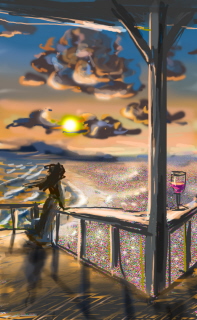
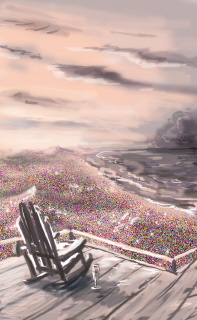
While I was housekeeping some files tonight I revisited the beautiful images Anna Repp created for my collection of interlocked stories, Glitter Rose, published by Twelfth Planet Press. I though it would be nice to share with you some of the pictures she sketched that didn’t make it into the book (only because we couldn’t afford all the colour). I love them!


The first two show the main character, Tinashi, on the verandah of her beach shack, sipping pink champagne. In the third she is absent but her glass is there.

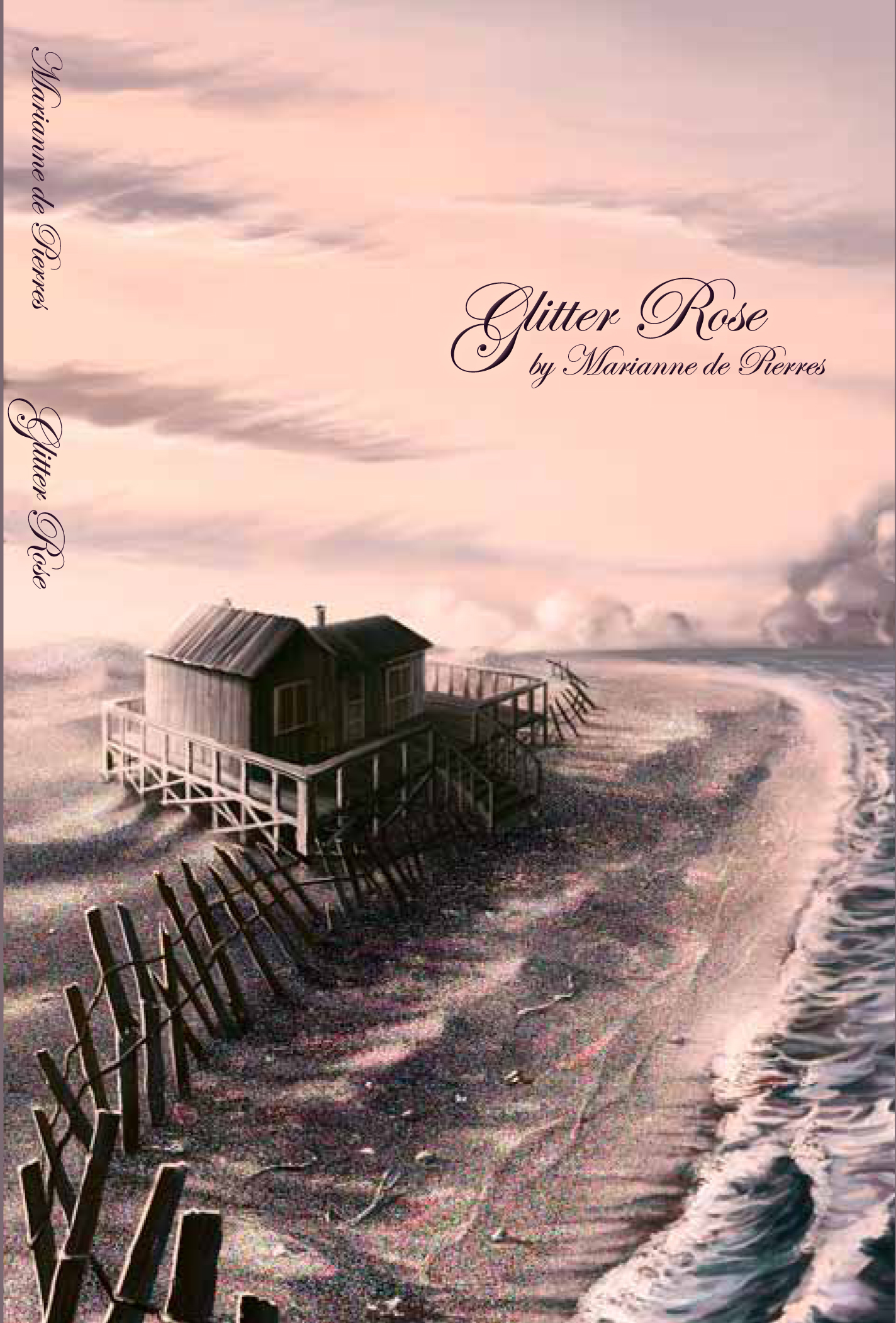
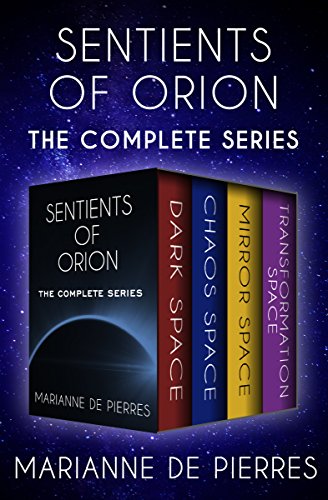
Below is the cover we eventually chose, and you can see the glittering colour in the sand.

If you’re not familiar with the collection, here are some review snippets that will give you an idea.

Domestic Extremist reflects on Glitter Rose.  ”Marianne de Pierres, Glitter Rose, 2010
I picked this up in Sydney’s Galaxy Bookshop and spent a very relaxed 50th birthday reading it. There are four linked short stories about a small, imaginary Australian island which has been colonised by strange spores from the ocean deeps, organisms that can bathe the beach in a pink light, create giant sandcastles that are impervious to water and subtly alter the bodies and minds of the infected island residents. There’s a small ensemble cast of characters (reminding me often of The Last Tobacco Shop in the World) in which a new arrival to the island is constantly out of her depth and learning the hard way, plus there are deaths and strange goings on of a mystical and earthy nature. De Pierres was clearly inspired by J.G. Ballard’s Vermillion Sands and these tales share a Ballardian atmosphere of languorous decay; undoubtedly the best story is ‘Mama Ailon’, a deftly composed tale about a strangely cathartic birth which brings the stories to a kind of conclusion – in her notes De Pierres says this story cycle is probably complete, but no – she absolutely must write more of these, and I must read more from her.”

“Strange, deep, haunting … the stories in Glitter Rose will challenge you, and you may find some of the remarkable and vivid imagery creeping into your subconscious. I definitely recommend this worthwhile collection. Just be aware that these may look simple, but they’re not casual reading. You’ll need to bring something to the table, too.” Geek Speak Magazine

Glitter Rose has its own website. You can explore more about it there.

Reviewed by Diana Pinguicha

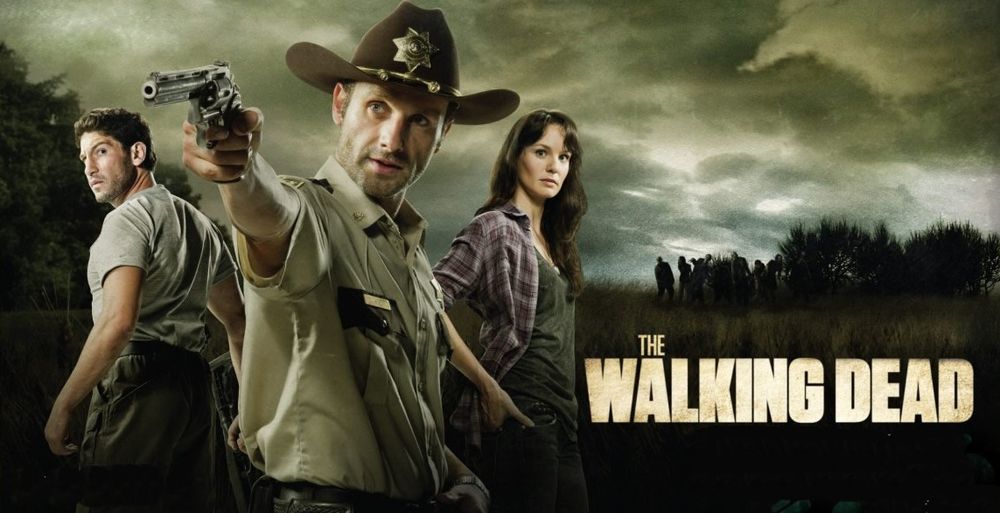
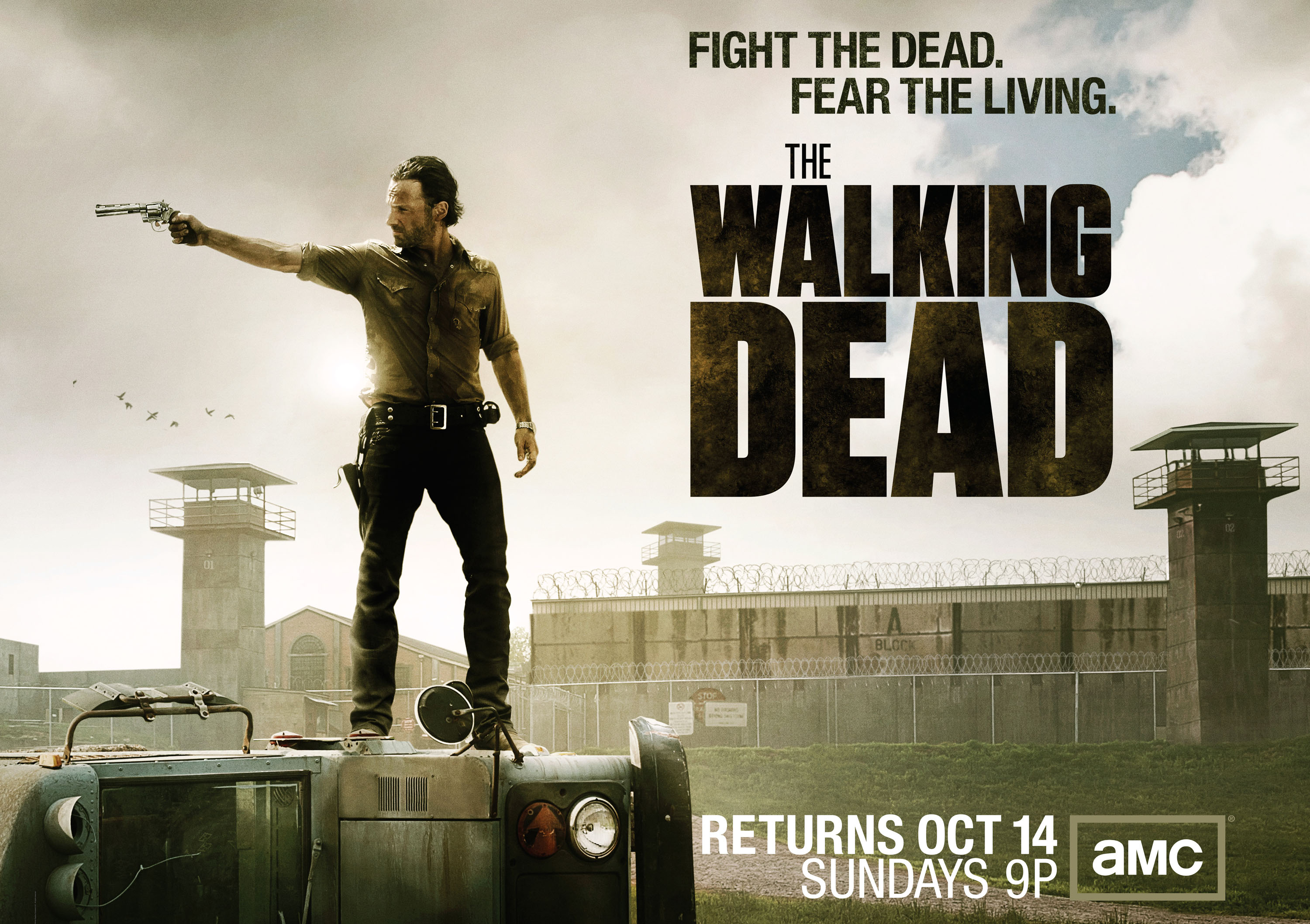
If you have a TV, or just go to shops that sell DVDs, you have probably heard about The Walking Dead (which I’m going to shorten to TWD from now on), the AMC TV series that is an adaptation of the comic books of the same name.

Please be advised that the series contains mature content that is not suitable for people under 16. Its content is extremely graphic in both TV and comic books. There will also be spoilers to both TV and the comic books, so if you haven’t watched/read either, follow my advice: read the comics first. They’re far better than the TV adaptation.

So, let’s start on why I decided to watch the show: I love zombies. I’ve been a fan of the Resident Evil games since I was young (and they scared the crap out of me back then). Also, the series was greatly publicized in my college (Instituto Superior Técnico, in case you don’t know)—and when I say it was greatly publicized, I mean it was greatly publicized. I’d never seen a TV series being so advertised in Portugal—I mean even our lunch trays had TWD paper protections. So a mainstream TV series with zombies? How could I not watch it?

The start was pretty interesting—the main character, Rick, gets shot and when he wakes up, he’s in a deserted hospital and the zombie apocalypse has already ravaged everything around him. He does not know if his wife and kid are still alive. He doesn’t know where to go. He finds a group of survivors and after some trouble, they lead him back to camp where he finds his wife (who, by the way, thought he was dead and was having an affair with his best friend, Shane) and son. The premise is simple: survive. But what makes The Walking Dead so much better than other zombie-apocalypse works is how truly tragic and realistic everything is.

Characters in TWD don’t really suffer from the “Oh no, my sister is a zombie! I cannot kill her!” syndrome. They do what they have to do. In the first two seasons, the TV series mainly followed the comic book storyline. However, the more the TV version progresses, the further it gets from its source material. Which is, in my honest opinion, a disappointment.

The casting is mostly spot-on. That’s where I can hardly fault the people behind the TV adaptation. Same for the characterization and environments. Zombies really do look like zombies, not some watered down version of such creatures.

There’s also a character in the TV version that is not in the comic books (Daryl) and he’s actually my favorite character on the show. He’s a great addition and Norman Reedus plays him perfectly, walking a thin line between selfish bad-ass and likeable anti-hero. The writing is mostly solid and believable, as well as everyone’s performances.

Now is where I rage about on how they’re not doing the source material justice. I knew some things were way too hardcore to show on TV, but with such violent shows out there, I thought they would maybe still do them. They didn’t and it really, really saddens me.

In its comic book form, TWD is really not about zombies, but about the cruel things people are capable of once they’re threatened. It’s about how people can really become monsters that are worse than walking corpses who feast on living flesh.

They have also, IMO, changed certain characters. While I cannot fault the casting of Danai Gurira, the writing they gave her pretty much made Michonne, who is an amazing, strong character, seem like an overly-suspicious woman who has little reason to be that way. Andrea, also one of my favorite characters in the comic, is constantly making poor decisions in the TV show, and attaching herself to the first alpha male she sees. Even Lori, Rick’s wife, is somehow worse on TV—and that’s saying a lot, since I hated her in the source material. Certain things the characters do on TV don’t make much sense because they’ve decided to cut crucial aspects for TV.

For instance, Shane’s death is much better in the comic. Same for Lori’s. In the books, Shane is killed by Carl. Lori is killed by the Governor when he attacks the prison, along with her baby daughter. Michonne has a much more valid reason to hate the Governor and an even greater reason to confront him before running. These things have much more impact in their original form than they did in the adaptation.

Still, TWD is a good TV series.

My recommendation is: if you like raw, graphic, ruthless depictions of a zombie apocalypse and an in-depth look at a man’s true nature and what a person does to survive, read the comics. If you just want an hour a week of zombies and don’t mind the slightly softer version of things, watch the TV series. 

Awards

davitt-award  aurealis-award   logo-curtin-university

Peacemaker - Aurealis Award
Best Science Fiction Novel 2014

Curtin University Distinguished Alumni Award 2014

Transformation Space - Aurealis Award
 Best Science Fiction Novel 2010

Sharp Shooter - Davitt Award
Best Crime Novel 2009 (Sisters in Crime Australia) 

Categories

Archives

Search

Follow

Keep in contact through the following social networks or via RSS feed:

  • Follow on Facebook
  • Follow on Twitter
  • Follow on Pinterest
  • Follow on GoodReads
  • Follow on Tumblr
  • Follow on Flickr
  • Follow on YouTube