by Joelene Pynnonen

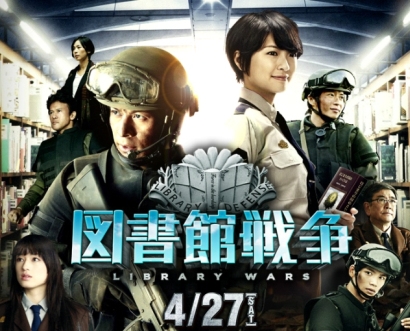
In 2019 Japan, freedom of expression and thought are under attack. The government has created an armed force to censor printed material. Only libraries are immune to the brutal Media Betterment Committee. Following the 1999 vigilante attack on a Hino library, libraries have created their own paramilitary force to defend and protect both libraries and the people who wish to use them.

Iku Kasahara (Nana Eikura) has wanted to join the Library Defence Force since a member of the organisation came to her aid against the Media Betterment Committee, saving a much anticipated new book for her. Her passion for freedom of expression and fearlessness are not enough to pull her through recruitment however, especially when she has a tendency to doze off during lectures. Training proves to be even more difficult for her under the command of drill instructor Atsushi Dojo (Junichi Okada), who is harder on her than on the other recruits.

Library Wars is an entertaining film that will keep you engaged throughout, but for unexpected reasons. The distinctive narrative elements that should have pulled together to make Library Wars compelling were over-shadowed here by more generic ones. Based on Hiro Arikawa’s series of young adult novels, Library Wars is lighter than the trailer suggests. While the film is marketed as an action movie with a philosophical bent and a bit of romance, it’s closer to a romantic comedy with a lashing of action and a dash of anti-censorship ideals.

The plot-line, which is so fascinating and relevant in this age of technology where everyone seems to be either on the side of extreme censorship or extreme media tolerance, is relegated to being a vehicle for the exploration of characters and their relationships. What could have been a gritty and unflinching look at the nature of freedom of expression and governmental control being rationalised as protection for citizens is rendered much simpler. The Media Betterment Committee is reduced to the faceless enemy, without the nuances that a story like this demands.

Despite the ethics being set in black and white without shades of grey, Library Wars is well worth watching. As an action/romantic comedy it works. All of the characters are brilliantly realised and have wonderful chemistry together. Kasahara and Dojo in particular. Their relationship is not something that happens all at once for them, or for us. Initially, they are genuinely at odds with one another, and it comes through to the audience as well. Until they begin to warm to each other, it’s hard to envision them as a couple. Afterwards, it’s hard not to.

The action picks up in the second half of the movie, balancing out the romantic plot and keeping the film at a fast pace. The combat scenes are starkly reminiscent of war zones. It brings a sense of urgency and desperation to the plight of the Library Defence Force.

Once your expectations of the film are adjusted, Library Wars is a fun movie with some brilliant performances. The characters are wonderfully drawn and emotionally compelling and the action keeps the film from becoming too saccharine.

Reviewed by Jamie Marriage

As a kid born around the end of the Cold War I was exposed to a lot of different influences and styles. I missed the 80’s but took the blast of the 90’s full in the chest. Some of my media heroes are far more of my father’s generation and sadly missed, some I got to grow up with as they rose to power in my own generation. One of those that falls between the two though was the musical group the Doug Anthony All Stars (DAAS for short), a comedy trio starring Tim Ferguson (the good) Paul McDermott (the bad) and Richard Fidler (the guitarist).

DAAS was one of those musical comedy groups that was as true to Australian culture as you could get; self deprecating, abusive, obscene and hilarious. This relatively short lived group, at least compared to many that are still touring decades later, was picking up creative steam when I was born and unfortunately scattered upon the winds by the time I was old enough to get my first glimpse of their material.

Over the last decade and a half I have been one of the many cult worshipers of everything that was DAAS; they were a musical force, creative gods (in the Greek Pantheon, getting up to all kinds of trouble kind of way), and had personalities that etched themselves upon the psyche forever.

All that being said there were a lot of questions awaiting answers regarding the fate of DAAS. Most of the stories they themselves planted in the media about their formation and disassembly were false, half out of mischief, half out of mistrust of the media. And who are we to deny them this form of entertainment.

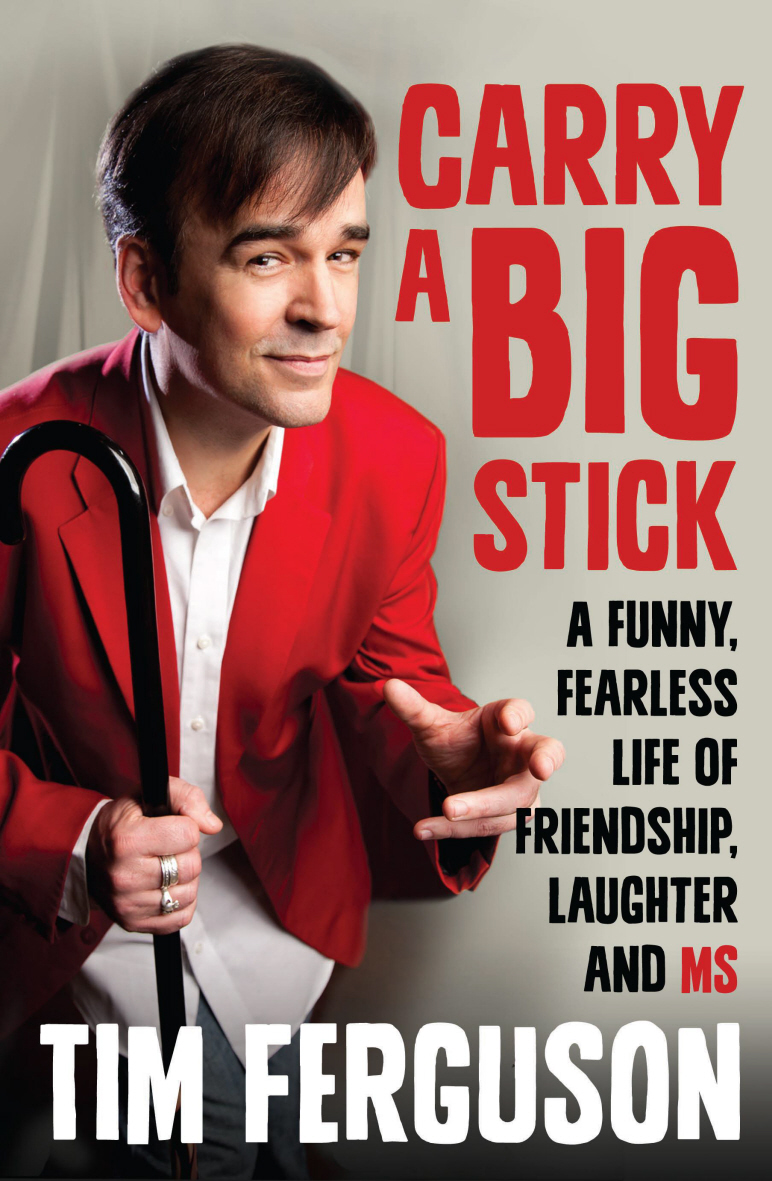
So when I was given the chance to read Tim Ferguson’s new Autobiography, Carry A Big Stick, I put my hand up so fast I’m surprised I didn’t dislocate my shoulder.

Following one individual from birth to middle age is tricky for people that have never read an autobiography before; the only storyline is that of the individual themselves, every scene usually only gets a brief mention, and the supporting characters tend not to get much of a back-story. This isn’t dense space opera, nor is it a grand epic, but it is able to rub emotions raw and draw you in just the same.

Laid out in acts and split into scenes, much like that of a traditional play, Carry A Big Stick follows the life of one gorgeous man from childhood in the 1960s to the present day. With each successive act a Monty Python style separation of one stage of life to another. And throughout the narrative the silent antagonist follows our hero until he can deny its presence no longer.

The rise and fall of the Doug Anthony All Stars, Tim’s television acting and production career, and his later work as a comedy teacher and author are all covered throughout this four act play. Some of it will make you laugh so hard you’ll have to put the book aside, some has the power to drag tears from your eyes, but every scene is memorable. A precious story of its own to be treasured.

This is the book of one of Australia’s true comedic masterminds. His story told his way, and with all the truth a comedian can muster. What more could be asked from such a man?

It’s always immensely gratifying to see someone else’s visual interpretation of your characters. I got to experience that many times after I wrote the Parrish Plessis series and you can see some of the amazing “Parrish” fan art on the gallery page.

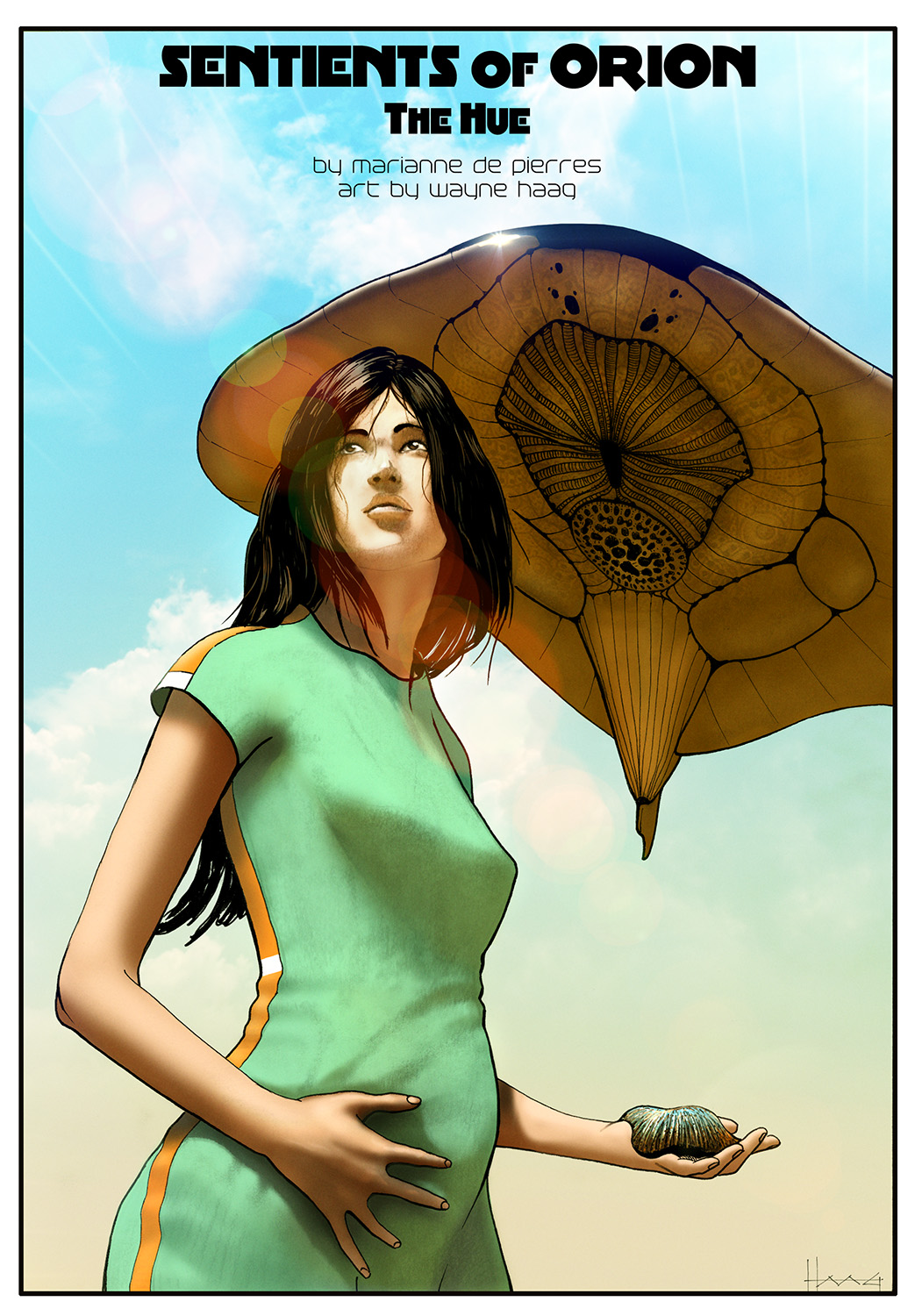
A little while back, film artist Wayne Haag aka Ankaris did this beautiful cover for the The Hue graphic novel, representing my character Mira Fedor (Sentients of Orion series), pregnant, on a very alien world.

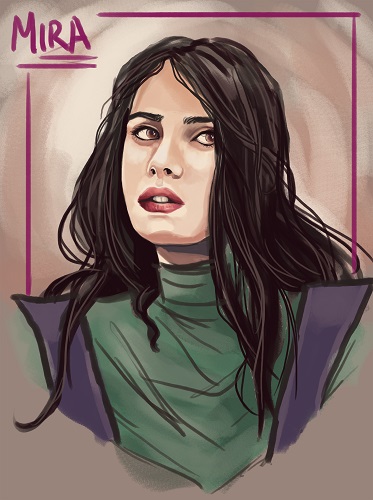
Today, I was delighted to receive another version of Mira by comic artist Danielle Schnell. How fascinating, that despite never having seen Wayne’s cover, Danielle’s version of Mira Fedor resonates with Wayne’s as they both capture her “hunted” look.

Thank you to anyone who has been inspired to draw my characters – what a wonderful gift to me!


Awards

davitt-award  aurealis-award   logo-curtin-university

Peacemaker - Aurealis Award
Best Science Fiction Novel 2014

Curtin University Distinguished Alumni Award 2014

Transformation Space - Aurealis Award
 Best Science Fiction Novel 2010

Sharp Shooter - Davitt Award
Best Crime Novel 2009 (Sisters in Crime Australia) 

Categories

Archives

Search

Follow

Keep in contact through the following social networks or via RSS feed:

  • Follow on Facebook
  • Follow on Twitter
  • Follow on Pinterest
  • Follow on GoodReads
  • Follow on Tumblr
  • Follow on Flickr
  • Follow on YouTube