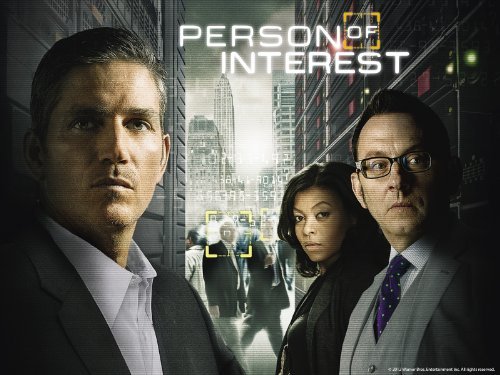
 Person of Interest was rating so high in popularity on my TV and Movie app, I grabbed a copy of season one. To be perfectly honest, I laboured through the first three episodes. There were not enough female actors and I had trouble connecting with the characters of John Reese (Jim Caviezel) and Harold Finch (Michael Emerson). Finch seemed to be a stereotypically nerdy genius and Reese was … well he was Reese (if you watch the show you’ll know what I mean). The premise – a super computer/artificial intelligence that can predict crimes against ordinary people (read: they are about to die), was also not an idea that intrigued me. I perservered because I had nothing else to watch at the time, and as the through-story began to grow, so did my interest.
The introduction of Root (Amy Aker) in S1 and then Samantha Shaw (Sarah Shahi) in S2 added new layers and tensions, and I began to feel the familiar tug of engagement as the series evolved into more of a complex thriller, than a predictable episodic.
Both the Reese and Finch characters gain nuance and depth as their back stories are revealed. Their relationship builds from what begins as something based on mutual but mistrustful need, into a rather sweet friendship. A quaint bromance between a one man wrecking ball with no respect for the law, and a morally questionable genius.
 As for the secondary characters. Well, I fell instantly in love with Agent Shaw (what’s not to love about a kick ass operative with a self-proclaimed personality disorder?), and Sarah Shahi does a wonderful job of being obsessive and indefatigable. Detective Fusco (Kevin Chapman) is perfectly cast as the corrupt but ulitmately good-hearted cop who’s got himself in too deep, and Amy Aker’s portrayal of brilliant hacker Root is pretty convincing. I still feel a little ambivalent about Taraji P. Henson as Detective Carter. Some episodes I’m totally on board with her, and other times, I feel irritated with the dialogue she’s been given. It’s like the writers want her to be smart but don’t always give her smart things to say (and then stuff happens with her in S3 – but I haven’t seen that yet, so no spoilers please!). By S2 episode episode 10, I experienced one of those rare goosebump WOW! moments as Gimme Shelter plays in the background as Reese is arrested by the FBI (see below).
Corrupt police, shady CIA, interfering FBI, shadow government organisations and powerful criminals all play their part in the POI tapestry. As the series grows, the ideas are fleshed out and the plot begins to show signs of some clever basket weaving, all the while tickling our palates with a taste of a possible future.
Fans of the series call themselves Irrelevants, which is a reference to the ordinary people who are about to become victims. And they can surely count me as one of them.
S2 ep 10. One of my favourite scenes in a TV series, which probably needs full context to be appreciated.