Alayna Cole
Alayna Cole is an MCA (Creative Writing) candidate who loves to write stories when she’s not studying.
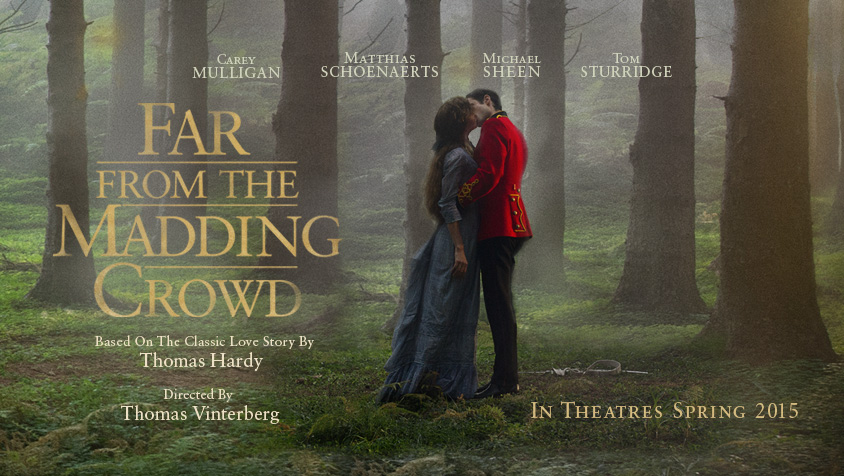 I was recently presented with the opportunity to watch a preview of Far from the Madding Crowd (Australia is slow, I’m sorry) and, when promised a period piece with feminist themes, I couldn’t refuse. I must preface this review by saying that it’s uncommon for me to watch a movie based on a book without first reading that book, but I am yet to read this famous Tom Hardy novel—I blame good intentions and a lack of time.
Time is my primary issue with Far from the Madding Crowd; the movie simply doesn’t use it well or, perhaps, doesn’t use enough. The entire film feels like an abridged version of a longer, more intricate story, jumping between key and well-known plot points without giving enough attention to character development. As such, the audience is unable to form a bond with Bathsheba Everdene and her three suitors—Gabriel Oak the shepherd, William Boldwood the mature bachelor, and Frank Troy the sergeant—or become invested in the relationships that form between them. There are several moments in the movie where I knew a period of time had elapsed between scenes, but it was difficult to determine whether it had been days, or weeks, or even months. This stripped away the significance of each event and caused the story to lack suspense.
The rushed narrative wasn’t the only part of this movie that fell short for me. Early reviews suggested Far from the Madding Crowd was a feminist flick about an empowered female protagonist, but I was disappointed. The opening voiceover by Bathsheba—played by Carey Mulligan—and her refusal to ride side-saddle were a promising start, highlighting her wildness and independence in a time where women were expected to be subservient; however, when she turned down the first of several proposals by suggesting that, if she were to marry, it would be to someone who could tame her, I was bothered.
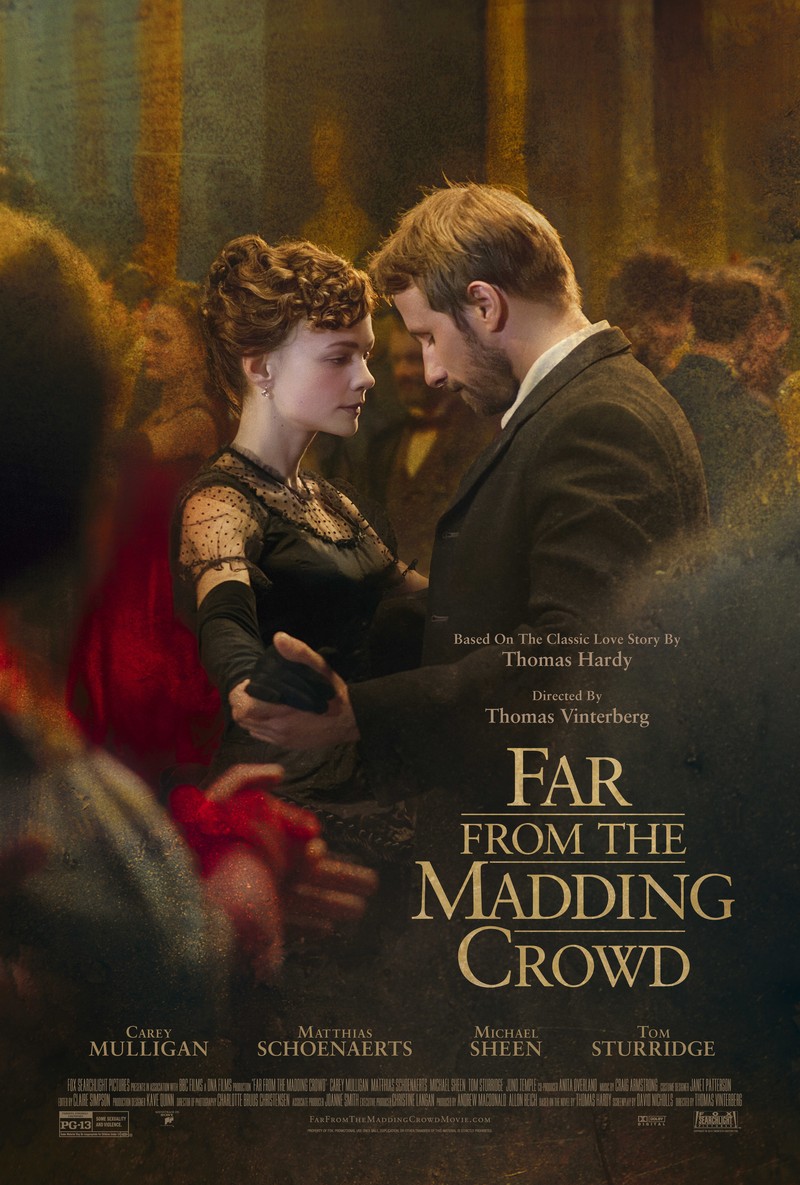 This is the part of my review that will paint me as a raging feminist, but let me be clear: I’m not against romantic movies where a woman’s sole intent is to marry a man, particularly when those movies are set in a time when that was the societal norm. My disappointment doesn’t stem from Bathsheba’s apparently constant thoughts about men and marriage—contributed to by the movie condensing the events of the source material so that she doesn’t have time to think about other topics—but the fact that Bathsheba denies her interest in such things, claiming independence and female empowerment while failing to enact it.
On the surface, Bathsheba suggests that she could never belong in a world where women are deemed inferior to or different from men, but her actions conflict with this belief. Throughout the film she constantly requires reassurance and opinions from the predominantly male array of characters, particularly Gabriel. She frequently tells him that she needs him, not only for his farming expertise, but also for his ‘objective’ views about her personal decisions.
The scene where Gabriel leaves the Everdene Farm at Bathsheba’s insistence, only to find that she needs him to return to save their flock, has been altered for the movie in a way that further strips Bathsheba of the independence and empowerment she is supposed to exude. When Bathsheba sends another worker to ask for Gabriel to return, he insists that she ask herself; in the movie Bathsheba rides to see him and essentially begs for him to come back to the farm, while my research shows that in the book she simply writes him a letter. This change makes Bathsheba seem more desperate and less distant, sacrificing the character’s independence for the sake of the scene’s visual appeal.
Visuals are the one thing Far from the Madding Crowd does exceedingly well; it is a beautiful film. In the opening scene, the way shadow and light are used to frame Bathsheba is phenomenal. The costume choices carefully tread the line between period and modern, placing the story in a space connected to the source material while still relatable for a contemporary audience. Shots of picturesque landscapes are reminiscent of travel brochures, while images of manor interiors look as though they are taken directly from home décor magazines.
But, while Far from the Madding Crowd makes me want to pack my bags for England, sadly the scenery is not enough for me to forgive the movie’s shortcomings. The film felt rushed and, as a result, failed to construct complex characters or meaningful relationships. I look forward to reading the novel, as I’m certain its epic length will allow for the narrative depth and pacing that this film failed to achieve.