Bec Stafford

Bec Stafford has a Masters of Philosophy from the University of Queensland. She blogs and interviews for the Escape Club and The Spotlight Report.

hough-zero-world-coverYour last release, is Zero World is about technologically enhanced superspy, Peter Caswell, who tracks colleagues through a tear in space. Your earlier work had been compared to John Scalzi and because of your previous novel The Darwin Elevator, you’ve been asked to speak at the NT Work and Safety Conference at Charles Darwin Uni about health and safety issues related to a zombie apocalypse, as well as various other disaster scenarios. How did you become involved in that topic and what lessons can we learn from such scenarios from speculative fiction?
 
I was invited to speak at the conference by its organizer, Martyn Hill. Though I have no professional experience in the health and safety field, Martyn felt (and I agree) that it might be interesting to hear the perspective of a fiction writer on these topics.  I’m planning a lighthearted talk about the crazy, dangerous scenarios we sci-fi authors imagine, but more importantly how our characters react to those situations.  I think perhaps some of the techniques we use to tell these stories can help safety officials envision real-world scenarios and solutions, particularly in the future.
 
Your new sci-fi spy thriller, Zero World, centres on a technologically enhanced superspy, Peter Caswell. Can you tell us a bit about the process of writing this story and how you first came up with Peter?
 
My process involves creating a brief outline (one sentence per chapter), along with a lot of thinking about the world the story will be set in. In this case, Peter finds himself on a world that appears to be Earth’s twin, at least geographically.  His character came partly from necessity for the story I wanted to tell, and partly from a random conversation with another author about Korean action thrillers.
 
When you were a kid, were you into spy fiction and film and did you ever dream of being a spy, yourself?
 
As a kid in the 80’s, I discovered James Bond through the films, though I quickly read the books as well. As I grew up I moved on to the works of Le Carre and others.  The kid-version of me, who knew only of James Bond and The Man From U.N.C.L.E., certainly wanted to join the CIA. But more serious Cold War fiction made me realize the real deal was not for me. I wanted to create those stories, not be in them.

 
Jason HoughWhat are some of your favourite zombie films, and which best reflect your ideas about surviving a zombie apocalypse? Do you often find yourself shouting, ‘Oh, you’d neverdo that!’ in frustration at the screen when the protagonists are hatching escape plans?
 
To be totally honest, I’m not a huge fan of zombie films. At least, not the typical cliche shambling, shuffling brainless brain-eating zombie films. If we get technical about it, my books feature subhumans — real living animals that have been infected with a brain altering virus.  They’re not undead.  It’s a common misconception.  Still, I understand it, as they fall into the “formerly human” category.

So with that in mind, my favorite zombie films are probably “Shaun of the Dead” and “28 Days Later”. I also recently enjoyed the zombie novel “The Girl with all the Gifts”.
 
Jason, you were formerly an animator and game designer. Has that background informed your writing career and what are your top 5 games of all time?
 
It’s definitely helped! My animator background has helped me to envision the “props” and sets my stories use.  As a game designer, my primary job was to build the world of the game. What populates it, and what rules govern it.  This is the same sort of work I do when starting to plan out a novel.  The big difference is that now I’m not constrained by the capabilities of the technology, or how many artists and programmers are available.

It’s hard for me to rank my favorite games because I like them for so many different reasons. There’s no quantifiable way to say “this one is better than that” on a list.  So, I’ll throw out some favorites in no particular order: Thief: The Dark Project, Deus Ex, System Shock, Elite, Half-Life.

Jason M. Hough – author of The Dire Earth Cycle and, out now, ZERO WORLD.

www.jasonhough.com


Anna Walmsley

Anna is an Airforce engineer-turned-community-development worker, wife to one sky-bound pilot, and mum to three children, who, through no plan of her own, has found herself home-schooling (eek!), working and sharing life in a remote indigenous community in North East Arnhem Land, Australia.

Anna Walmsley reflects on her time living and working among the Yolgnu people in the remote community of Raminging in Arnhem land.

Anna and Gadiki

Life out here is a lot of hard, interspersed with intense and wonderful moments, and many people ask me… why on earth would you live there?

In the beginning, this question was a difficult one to answer.  The flights we provide (as part of MAF) give much needed access to services for the outstations, as well as making the work of many government and non-government agencies possible. But the flying here is neither as dramatic or obvious a humanitarian service as that of other MAF operations worldwide. There are also other carriers here — although many do not last much past 5 years — and Arnhem Land is supported by the excellent services of a developed nation — albeit few that are culturally appropriate. Health, policing, welfare are all available. So why? Why come here?

The longer we stay, however, the clearer it becomes. So in answering this question, I would like to introduce you to my friend and yapa (sister) Gadiki.

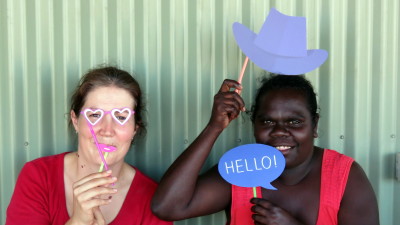
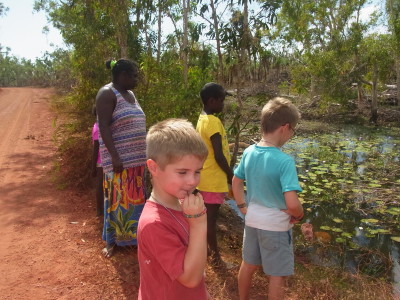
raminigining-2Gadiki is a single Mum to a beautiful 10 year old girl, Vashti (Wamutjan). She is a strong, capable woman with a strong faith who takes it one step further by choosing to be a key actor in the Ramingining church and community. I (Anna) first met Gadiki at an evening service where she walked up to me and told me she needed someone to help her with her Nungalinya (Bible college) homework, and she had had a dream where God had told her I was the person to ask.  I said she was welcome to come around any time, and she promptly did.

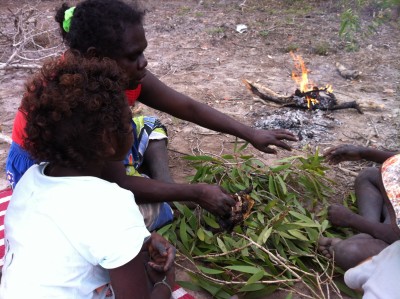
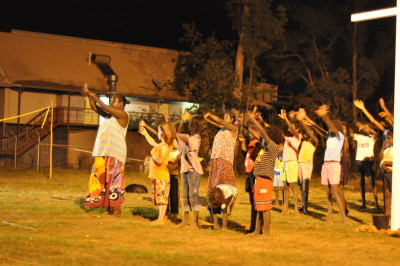
Since then we have shared many things including our love of gospel dancing (I can’t see anyone who couldn’t enjoy this!!).  I have shared my Internet, my administration skills, my cooking, my help and my knowledge of all things balanda (western culture).  She has shared her hunting skills, her love of her culture, her child-minding skills, her energy, and her dance routines. We have shared our lives and our faith, learning and growing together. She has been incredibly open to me about her struggles and willing to sit and answer my many deep and possibly prying questions about Yolngu ways of doing things.  But life for Gadiki is not easy.

ramingining-1Overcrowded housing, chronic disease, malnutrition, substance abuse, early death, domestic violence, and suicide: these are not just headlines, they are the daily reality for many here. But while this reads like a situation to be found in a less developed country, we do not live in a place of absolute poverty. People do not go hungry here for a lack of money or food. No, what exists here is a different type of poverty.

The clash of ‘white’ on ‘black’ has lead to today’s Yolngu living in an almost no-man’s-land of grey. No longer is Yolngu Rom the only law governing the land. Every day they must interact with a completely foreign and mostly unforgiving system that presents obstacle after obstacle in the path of many leading the life of their choosing. The result has been that, out of frustration, confusion, or shame, many give up.  “Want a job? Great, can you tell me your tax file number?” What’s that???; “Want a tax file number? No worries we need a birth certificate. What? You don’t have one?”; “Feeling sick and need help? Here is top-rate care but NONE of it is in your language.”; “What about food. Are you hungry? Sure, there is a shop. But with a myriad of food that is either not good for you or you don’t know how to cook.”

Feel a bit overwhelmed? I know I do, and this is their reality day in and day out.

ramingining-3So why are we here? For people like Gadiki.  Like all Ramingining families, she ‘lives‘ in a 3 bedroom house with up to 16 other people in it. She recently built herself her own tin house with no air conditioning  or front door to give her and her daughter space.  She has struggled with feelings of desperation, continual humbug by people wanting anything and everything she has (food, money, clothes), violence, illness and death.

Despite this all, she has hope and hungers for her children, her family, her people to be strong in the future, and she works tirelessly to make this happen.

Life for Gadiki is not easy, and hers is a story echoed throughout Ramingining and Arnhem Land; but unlike many, she chooses to strive for change.  It is people like her that present the glimmers of hope for the Yolngu to stand up into the future. But these few need people to help provide a bridge to the unknown balanda world… and it is here we find ourselves.

We are doing nothing more than offering friendship, the knowledge of our way of life that we take for granted, and our support when the burden of life here gets too heavy — a proverbial wind break to the small sparks of Arnhem Land, which will hopefully one day set the whole place ablaze with a strong people restored.

 If you would like to donate to Anna and Scott’s work, please follow this link to the MAF website.
Maria Ramos

Maria is a writer interested in comic books, cycling, and horror films. Her hobbies include cooking, doodling, and finding local shops around the city. She currently lives in Chicago with her two pet turtles, Franklin and Roy. You can follow her on Twitter @MariaRamos1889.

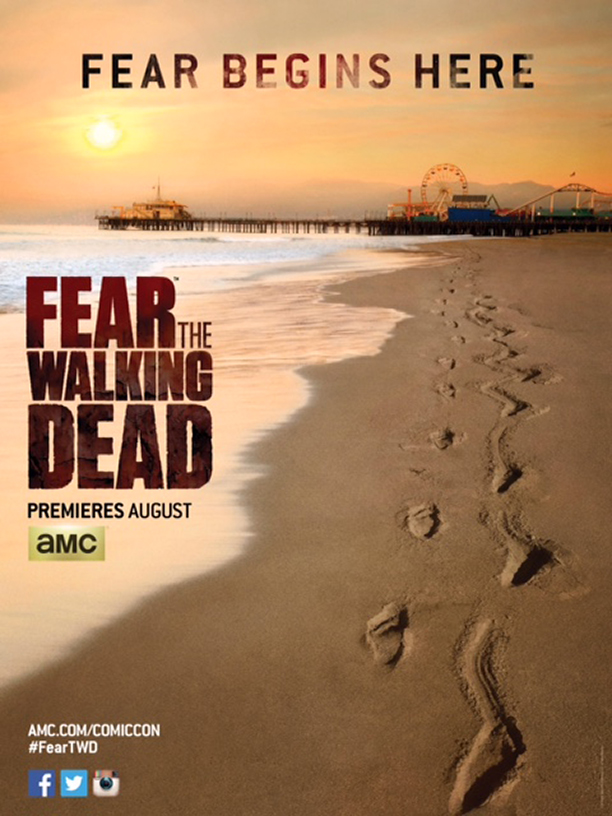
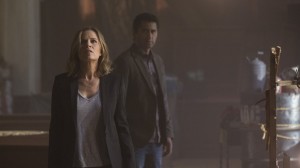
Fear-the-Walking-Dead-poster (1)The Walking Dead has been a popular and well-known zombie phenomenon since its initial launch in 2011 and is still going strong with its sixth season set to premiere this fall. Its most known for its riveting and tough characters but the women of this hit show have long been a contentious subject among fans. Many have agreed that the female characters are often undermined by men and continuously step aside so that Rick or Daryl can have their time in the spotlight. But now that the show’s companion series Fear the Walking Dead has premiered, will it follow in its predecessor’s footsteps or take its female characters in a new direction?

Though women are prominent among the landscape of The Walking Dead, it has been often commented that their characters are one dimensional at best. Rick’s wife Lori was seen as a whiny, pushy, adulterous instigator who was as likely to cause trouble as help prevent it. Andrea was also argumentative and pushy, and, while she seemed to start off somewhat strong, lost most of her direction as her story progressed. Carol has been one of the few regular female characters on the show who has gone through a real period of growth and evolution. She started out a somewhat timid wife, married to an abusive man and desperate to keep her daughter safe. However, she ultimately lost both her husband and child. These losses changed her over time into a much darker, much sharper individual, until she became one of the most dangerous – and most interesting to watch – characters on the show.

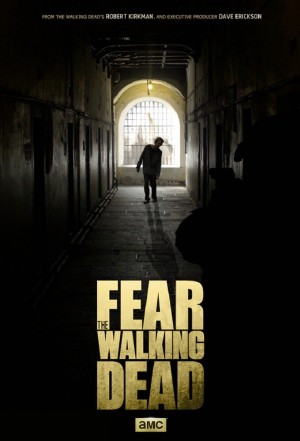
 fear-the-walking-dead-posterSo far, Fear the Walking Dead has presented two possible female leads to rival those found on its parent series: Madison Clark and her daughter Alicia. Madison is a school counselor and administrator, a mother of two, a divorcee, and a girlfriend. Her actions show the caring and motherly aspects we expect but she comes across as a little unsure of her own feelings in regards to how she is doing as a parent. She also doesn’t necessarily listen when people tell her things she doesn’t want to hear, and doesn’t stay behind when people try to keep her safe. It looks like they’re setting her up to be something of a cross between Lori and Andrea from the original show, which might not be the best direction to take her, as they were not necessarily the most liked characters of The Walking Dead.

Her daughter Alicia isn’t as developed as she could be at this stage of the game. She has the makings of a bitter and angsty teenager who’s constantly disappointed in her family. In the first episode of the series, Alicia seems to spend half her dialogue reiterating how desperate she is to get away from home. Although it seems that she’s ultimately a smart kid and the “good” child of the family, it’s hard to find her likeable when she spends so much time hating everything that surrounds her.

While other female characters have made appearances in Fear the Walking Dead, only time will tell if they were important enough to the series to be brought back for more screentime – and if that screen time will show them to be more than one dimensional. Even Madison and Alicia still have that to prove after the first episode. Maddie has shown us little but her tough-as-nails, wanting-to-take-charge attitude (except for a brief show of insecurity over her missing drug-addicted son), and Alicia has predominantly just acted like a regular teenager. The show may seem to believe it is female character friendly, but it doesn’t even pass the Bechdel Test. It may
have two women characters talking to each other, but all of the interactions so far seem to have been centered around men, instead of focusing on any other issue.

fear of the walking dead 2Fear the Walking Dead may not have had the most promising start when it comes to female characters, but that doesn’t mean the potential isn’t there to see that change. Maddie could find her softer side, Alicia could drop the teen angst act, and the few other women introduced briefly could play a much bigger role in the story to come. Both shows are available on AMC through cable TV, so make sure you don’t miss any more of the zombie fun and character developments. Only time and more episodes will prove if this series will follow in The Walking Dead‘s footsteps or not.


Awards

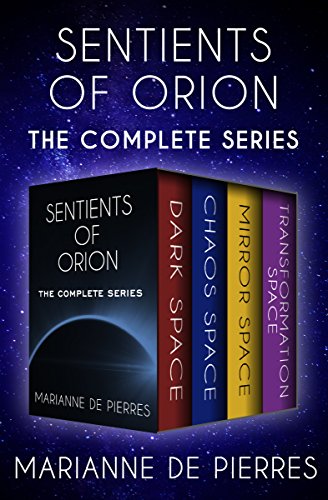
davitt-award  aurealis-award   logo-curtin-university

Peacemaker - Aurealis Award
Best Science Fiction Novel 2014

Curtin University Distinguished Alumni Award 2014

Transformation Space - Aurealis Award
 Best Science Fiction Novel 2010

Sharp Shooter - Davitt Award
Best Crime Novel 2009 (Sisters in Crime Australia) 

Categories

Archives

Search

Follow

Keep in contact through the following social networks or via RSS feed:

  • Follow on Facebook
  • Follow on Twitter
  • Follow on Pinterest
  • Follow on GoodReads
  • Follow on Tumblr
  • Follow on Flickr
  • Follow on YouTube