Alayna Cole

Alayna Cole is an MCA (Creative Writing) candidate who loves to write stories when she’s not studying.
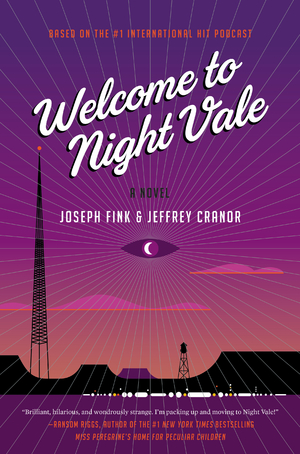
fink-nightvaleWelcome to Night Vale is a novel based on the incredibly popular podcast of the same name. The podcast is a way for non-residents of the fictional desert community to listen to broadcasts from the Night Vale Community Radio station—a staple in Night Vale households whether they like it or not—as Cecil tells us about the many mysteries that plague the peculiar town.

The novel adaptation of the podcast primarily follows two specific mysteries (while often deviating onto other strange, tangential narrative paths) and contains all of the bizarre absurdities that lovers of the podcast have come to expect. But that’s not to say you need to be a long-time listener of the Welcome to Night Vale podcast to enjoy this book. While those already familiar with the Night Vale community may notice the occasional reference before somebody who is new to this universe, every peculiarity is introduced in a way that provides enough context for all readers to interpret—if not understand—what is going on.

 And not quite understanding is part of the joy of Night Vale.

In this way, I’m sure Welcome to Night Vale is a ‘love it or hate it’ experience. Some people will dislike the unusual narrative style, with a narrator who insists that you imagine something—a teenage boy, for instance—and then tells you that you’re imagining it wrong. The narrative is often derailed by seemingly-irrelevant transcripts of Cecil discussing the traffic or reminding us that librarians are dangerous. Anybody who prefers a narrator who tells a nice, linear story while minding their own business and staying inside their book likely won’t enjoy their adventure through Night Vale.

I only needed to read the foreword of Welcome to Night Vale to know that this novel would quickly become one of my favourites. The book is incredibly clever. Details are revealed and withheld with deliberation and care, leaving the reader with a haunting, lingering mental image of a town that is dissonant when compared to their own, but that is also terrifyingly similar.

I remember being introduced to the principle of ‘Chekhov’s gun’ in a first year creative writing subject at university, and Welcome to Night Vale is the embodiment of that idea. If you’re unfamiliar, this principle suggests that everything included in a story must be relevant to that story, or else should be removed. Even the smallest reference to the strangest thing in Welcome to Night Vale comes up again at one time or another, and the most surprising characters and objects become integral to the overall story. In this way, everything that happens in Night Vale is linked to everything else that happens in Night Vale. Time and space are weird, dude.

As I worked my way through the novel, I encountered innumerable sentences that were so interesting or bizarre that I just wanted to read them aloud to someone. I involuntarily became the annoying person who sits next to you at a movie and points out all the clever parts, but without the benefit of you having any knowledge of the surrounding story. I was so excited by this ridiculous adventure that I just had to share it with the people around me.

I enjoyed being told to imagine things. I even enjoyed being told that the things I was imagining were wrong and that I should try again. I liked being given incredible detail about some of the characters, objects, or settings, but almost none about others. Welcome to Night Vale made me think, made me ask questions, and made me marvel and wonder at the world I was travelling through as well as my own.

At first glance, Welcome to Night Vale seems to be completely distant from the places we inhabit. After all, we don’t have teenage boys who can morph into whatever physical form they want, or a pawn shop where we have to perform strange hand-washing rituals before we can pawn our items, or doors that need to be shouted at before they will open. And yet the residents of Night Vale consider these goings-on entirely normal—or, at least, mostly acceptable.

However, on closer inspection, perhaps there are aspects of our lives that we accept, but that would seem just as unusual to an outsider, looking in. Our teenagers may not be able to transform themselves from human form into that of a wolf-spider or a sentient haze at will, but they are asking similar questions about who they are, how they should look, and how to fit in. We may not need to wash our hands while chanting in order to pawn our possessions, but we have many strange rituals and routines of our own. Often Welcome to Night Vale touches on realities that are a little too relatable, like the strange thoughts many of us seem to miraculously have while in the shower, or the distress that sometimes comes when inhabiting the space between waking and dreaming.

Welcome to Night Vale spends a lot of time exploring the lives of the community’s many and varied characters. Some have flaws, most have peculiarities, and all are relatable in one way or another. While the development of the two female protagonists is evident, many of the side-characters seem to progress very little, acting as symbols for greater issues or signposts for the narrative while lacking their own fully-fledged personalities. But in a lot of ways, that’s the point. Characters struggle to understand the routines they find themselves trapped in, to decide whether they enjoy what they do every day, and to remember how they even came to be where they are. In doing so, these side-characters cause the protagonists—and the reader—to ask themselves: am I a fully-fledged character? Do I know how I came to be where I am? Do I like it here?

Welcome to Night Vale is a wonderful journey into absurdity that will make you ask a lot of questions. At first, you will be wondering ‘What are those strange lights in the desert?’ and ‘How can a house be sentient?’ but before long—before you even notice the questions have changed—you will be asking different things, like ‘Who am I?’ and ‘What am I doing with my life?’

All hail the Glow Cloud.

Mandy Wrangles

Amanda Wrangles has never moved far from where she grew up on the beautiful Mornington Peninsula near Melbourne. An active member of Sisters in Crime Australia (winning their 2009 Scarlet Stiletto award for short story writing), she delights in books that dare to cross the lines in genre – particularly between crime and the paranormal world. Follow Amanda’s food and writing blog.


The Davee LadyThere’s some exciting stuff happening over at Australian publisher, Clan Destine Press.

Going back a few months ago, Lindy Cameron (head honcho at CDP) sent out an invitation to a number of Australian genre writers to a brand new anthology she was putting together.

Lindy’s idea was to collect a bunch of adventure stories for a Great Big Book of Adventure Tales. The kind of stories that have the reader flipping pages fast, dying to know what happens next, what dire straits would the author throw their characters into, and how would they overcome it. How would they find the stolen artwork, the missing space ship, the ancient relic hidden deep beneath the island grotto in the middle of the Bermuda Triangle while swinging from a bi-plane?

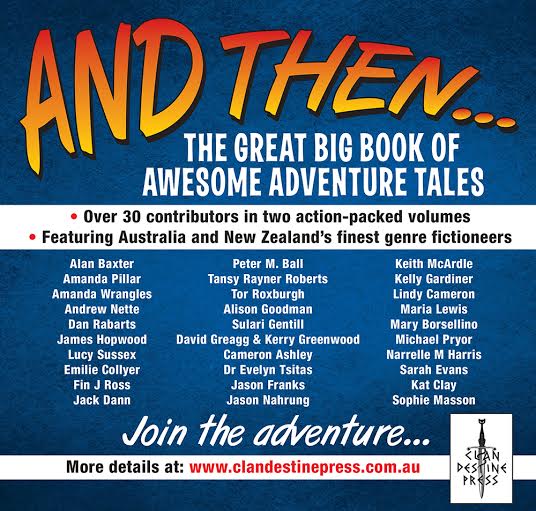
So, the title And ThenThe Great Big Book of Adventure Tales was born. Along with the invitation came some guidelines. Clan Destine wanted not one, but TWO main characters. Not a hero and sidekick kind of deal, but two real protagonists; best buddies, comrades, siblings or colleagues. The characters didn’t have to be human, but they did have to be equal. The stories also had to have an Australian flavour to them.

Lots of writerly folk got excited. Lindy was encouraging writers to think outside the box, to write away or within or between their ‘usual’ genres. She wanted the authors to play. She also offered them far more words than is usual in a short story anthology to tell their stories in – five to fifteen thousand. Fifteen thousand! That’s novella size, rather than short.

And Then... bannerI was lucky enough to be one of the writers invited. My story, Come Now, Traveller is actually one of the shorter tales to be accepted in And Then… While I generally write crime, or, more recently science fiction, this time I got to delve into a nautical steam-punkish kind of world, with some fantasy thrown in for good measure.

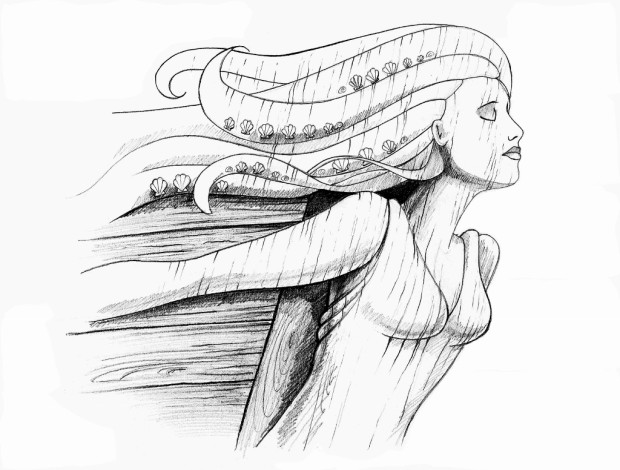
Come Now, Traveller is the story of a ship – The Davee Trader – her captain and the next in line. There’s a surgery scene, opiates, fights, jealousy and lust. There’s the Davee’s own brand of history, mythology and family dysfunction. But most of all, it’s about The Davee Lady, the carved timber figurehead that leads the Trader through the sea, told by the two who love her.

Of all the short stories I’ve written, this one was the biggest challenge for me personally. It’s also (now) my favourite world to play in. So…I’d love to see it in print.

And that’s where all the authors, Clan Destine Press and Lindy need your help. You see, when writers are given a huge maximum word count like fifteen thousand words, we generally use it. So LOTS of the invited writers have written big adventure tales for this big book. In fact, so many of us did just that – there’ll now be two gorgeous volumes to sit side by side in your shelf (or e-reader).

But here’s the thing: Clan Destine has to pay us. We didn’t quite come in under budget. So they’re running an Indiegogo campaign to get things moving. For contributors to the campaign, there’s SO many goodies as reward, including of course, the two huge paperback volumes with stories from over thirty of Australia’s ‘finest genre fictioneers’ for only $50. Yep, serious. Fifty bucks for two bricks of books.

Lindy has also enlisted the services of fabulous illustrator, Vicky Pratt. You can see here the utterly gorgeous work she has done of my own Davee Lady Figurehead. She’s so perfect, I must admit the first time I saw her, I might have shed a tear. Every story in the collection will have its own illustration and title page. And, just check out this Table of Contents and the authors involved. There’s some huge Australian names in there:


Peter M Ball – Deadbeats

Alan Baxter – Golden Fortune, Dragon Jade

Mary Borsellino – The Australian Gang

Lindy Cameron – The Medusa Code

Kat Clay – In the Company of Rogues

Emilie Collyer – The Panther’s Paw

Jack Dann – The Talking Sword

Sarah Evans – Plumbing the Depths

Jason Franks – Exli and the Dragon

James Hopwood – The Lost Loot of Lima

Kelly Gardiner – Boots and the Bushranger

David Greagg & Kerry Greenwood – Cruel Sister

Narrelle M Harris – Moran & Cato: Virgin Soil

Maria Lewis – The Bushwalker Butcher

Sophie Masson – The Romanov Opal

Keith McArdle – The Demon’s Cave

Jason Nahrung – The Mermaid Club

Andrew Nette – Save a Last Kiss for Satan

Amanda Pillar – It

Michael Pryor – Cross Purposes

Dan Rabarts – Tipuna Tapu

Tansy Rayner Roberts – Death at the Dragon Circus

Finn J Ross – Genemesis

Tor Roxburgh – The Boudicca Society

Amanda Wrangles – Come Now, Traveller

Alison Goodman – The Benevolent Society of Ill-Mannered Ladies

Sulari Gentill – The Stranding

Lucy Sussex – Sabah

Cameron Ashley – Dogs Leave Home to Die

Evelyn Tsitas – Stealing Back the Relics


So, head on over and check out the Indiegogo campaign. Contributions can start from as little as $5.

Hope you can join us on this wild adventure ride!

Bec Stafford

Bec Stafford has a Masters of Philosophy from the University of Queensland. She blogs and interviews for the Escape Club and The Spotlight Report

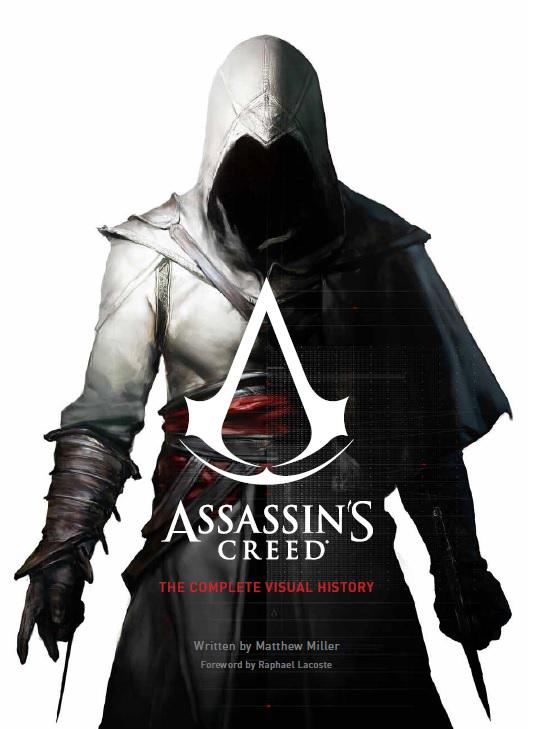
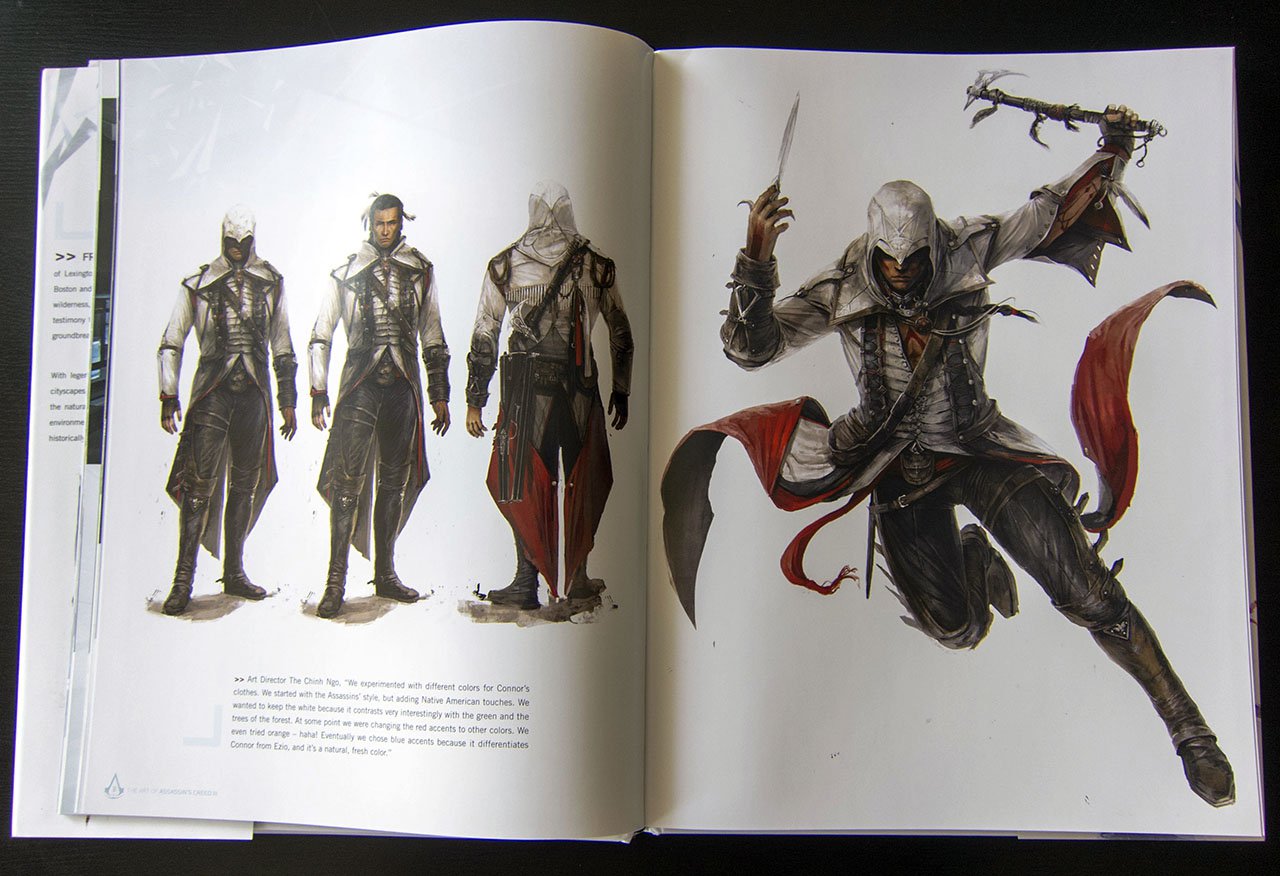
ac-complete-historyAssassin’s Creed: The Complete Visual History is quite simply one of the most visually stunning books I’ve ever held in my hands. Penned by gaming journo, Matthew Miller, this sumptuous hardback runs to a whopping 320 pages, most of which are filled with extraordinary artwork that you will want to revisit repeatedly. The franchise’s brand art director, Raphael Lacoste, has provided a short foreword in which he informs us that ‘Assassin’s Creed is about reimagining and reliving history, and with every instalment we aim to create plausible worlds and credible immersion for our fans.’ Fans of the game will already be familiar with just what an escapist’s wonderland Assassin’s Creed is, but this beautifully bound hardback takes the reader through the entire history of the game: its conception, development, characters, timelines, and historical inspirations.

Even before you open this mammoth hardback, the cover is likely to hold you transfixed for several moments with its embossing and arresting image of Ezio, head bowed, blades drawn – stark and dramatic against a pure white background. The comprehensive and jaw droppingly gorgeous concept art within is an absolute delight.

Many of the images have won design awards and make for fantastic posters or prints. The book also contains illuminating interviews with Ubisoft developers and artists who describe the complex planning and evolution behind the outrageously successful franchise. Every detail appears to be underpinned by an underlying philosophy that adds depth and dimension to this impressive artistic vision. Everything, from the logos and costume design through to the background rendering and architectural detail, has been thought through with the aim of preserving iconic design elements and intelligently enhancing the player’s immersion in the Assassin’s Creed universe.

 Assassins-Creed-The-Complete-Visual-History-03It has to be said that you don’t even have to be a gamer to appreciate the beauty of this Insight Editions publication. Designers, artists, history buffs, and anyone who simply appreciates beautiful illustration and art will become equally lost in this incredible world. The book is divided into 11 sections, the initial 9 being devoted to the various historical periods represented in the game, kicking off with the Middle Ages and working through the Renaissance, American Revolution and so forth, right through to the shorter Chronicles games, set in China, India, and Russia, and finally offering insight into the mysterious World Before. Following these info-packed, yet easy-to-read sections, we are presented with a chapter dedicated to the products and spin-offs inspired by the game, including cartoons, novels (and graphic novels), short films, and collectibles.

The background and genesis of each of the franchise’s assassins are explained in satisfying but never overwhelming detail, along with those of a number of secondary characters and adversaries/ Templars. It’s also fascinating to read about which historical characters were chosen to best serve the storyline and reflect each time period (e.g. Leonardo da Vinci, Nicolo Machiavelli, Paul Revere, and Ben Franklin). The planning behind each of the cities or settings throughout the franchise is also discussed and it has to be said that these reimagined historical places are every bit as fascinating and complex as the characters who inhabit them. Designers discuss having to narrow landmarks down, for example, in order to best represent an area (such as Paris) or having to deliberately add scaffolding to structures in order for characters to scale them. Elsewhere, details such as the shift from day to night throughout a game are described as being key features of the game’s realism. Each individual element has been cleverly engineered to spark our imagination in order that we may, as Lacoste states, ‘travel in time in order to discover epic locations and witness some of the world’s most pivotal moments in history.’

If you’re stuck for Christmas gift ideas this year, this release is highly recommended for fans of the game or anyone who appreciates an astonishingly beautiful coffee table art book.

Assassin’s Creed: The Complete Visual History – Matthew Miller

Insight Editions

320 Pages, hardback

Published 30th October, 2015

  • ISBN10 1608876004
  • ISBN13 9781608876006


Awards

davitt-award  aurealis-award   logo-curtin-university

Peacemaker - Aurealis Award
Best Science Fiction Novel 2014

Curtin University Distinguished Alumni Award 2014

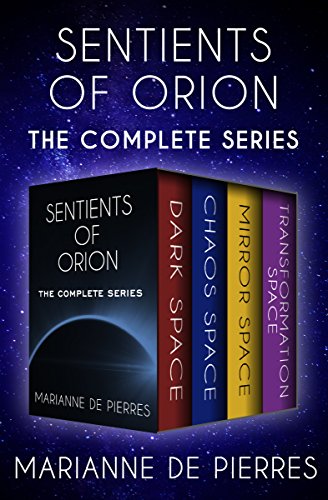
Transformation Space - Aurealis Award
 Best Science Fiction Novel 2010

Sharp Shooter - Davitt Award
Best Crime Novel 2009 (Sisters in Crime Australia) 

Categories

Archives

Search

Follow

Keep in contact through the following social networks or via RSS feed:

  • Follow on Facebook
  • Follow on Twitter
  • Follow on Pinterest
  • Follow on GoodReads
  • Follow on Tumblr
  • Follow on Flickr
  • Follow on YouTube