Be Stafford
Bec Stafford has a Masters of Philosophy from the University of Queensland. She blogs and interviews for the Escape Club and The Spotlight Report.
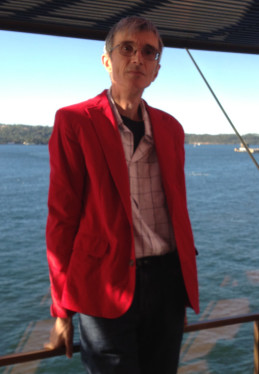
Bec Stafford interviews Sydney-based author, Stephen Hart
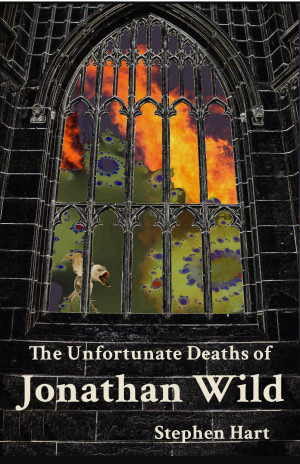
 When did you first conceptualise the roguish Pascal Bonenfant and how did he evolve, from your original vision to the character we know from The Unfortunate Deaths of Jonathon Wild (The Memoirs of Pascal Bonenfant Book 1)?
Pascal evolved a lot from his initial conception. I was trying not to write the sort of ‘middle class’ hero that appears all too often in fantasy novels. By working on his background – a happy early childhood followed by the horror of the Parish orphanage and his falling into crime in the poverty-stricken streets of London – I hoped to avoid this.
A great deal of this evolution happened through writing. There are at least 30,000 words on the cutting-room floor – most of them about Pascal. I wrote scenes in the orphanage; the scene where he re-unites with his friend Todd after they had left the orphanage separately; a scene with him encountering the ghost of a murder victim; and a lot of scenes with Jack Sheppard including a whole sequence where he helped Sheppard escape from Newgate.
In the end, I decided this was all too much information for the reader and I chopped it all out and started the book with Sheppard’s execution. It made everything tighter and saved the reader a lot of effort.
The result of all this apparently wasted effort was that, in my head at least, Pascal was a fully developed character. In any given scene I had a pretty good idea of what his motivations would be and what about his past would be driving him.
The other thing that helped with the conception was writing parts of the book from Rose’s point of view. Originally, it was all Pascal’s narrative, but seeing him sometimes from the outside told us a lot more about his character. For example, there is a scene early on where a young thief tries to steal from Rose while they are out walking. Pascal is outraged that anyone would try and hurt her and he nearly kills the young man.
When it was told from Pascal’s point of view it was ‘maybe I shouldn’t have hit him so hard’. When I switched to POV to the gently brought-up Rose, the violence suddenly becomes shocking. So seeing Pascal through Rose’s eyes showed me more about him than just his own thoughts had done.
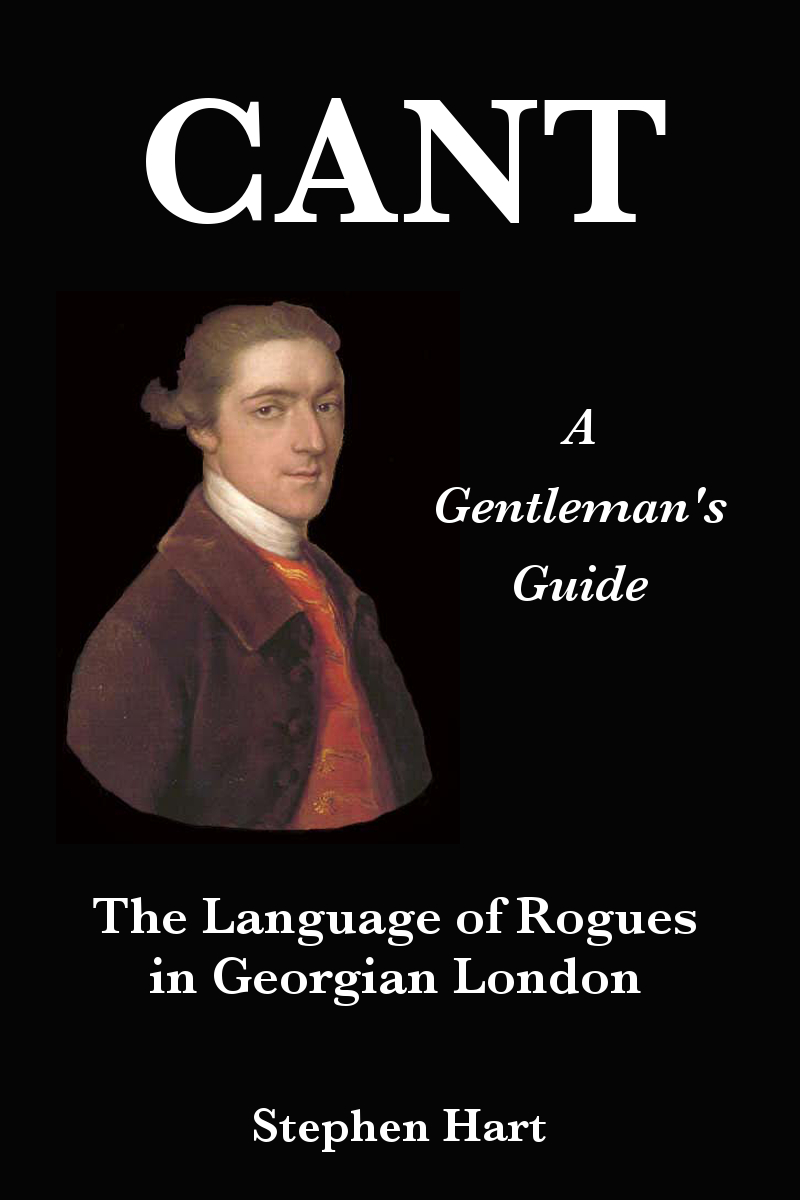
 The previous year, you released Cant “A Gentleman’s Guide”: The Language of Rogues in Georgian London. Were you writing your fiction and non-fiction concurrently as you researched for your Pascal Bonenfant work? Which was more satisfying to write and why?
I was working on the (I think) 5th draft of the novel when it occurred to me that I had the makings of a book sitting in the Cant section of the site (which I had built to keep a record of the thieves’ cant used in the novel)
I went with the conceit of a language handbook but for the Georgian underworld rather than a foreign country. I thought it would make a nice break from the heavy work of re-drafting. Naively, I thought I could knock it over pretty quickly. I was disabused of this notion in fairly short order.
The main problem I encountered was that lists of words are actually pretty boring. It wasn’t until I found the concept of Digressions – little snippets of historical information to put the Cant words into context – that it all came together. It did require a lot more work though. So although the Cant book came out first, it was written well after most of the work was done on Jonathan Wild.
There is a very different satisfaction to be had between a novel and a non-fiction work, so it is difficult to decide which was more satisfying. If I had to make a decision, I would probably vote for the Cant book because it is very different from most books available on the topic and many people have written to tell me how useful it has been. The novel is (I believe) a good story but there are an awful lot of good stories out there.
Stephen, you originally intended your website to be a storage space for your novel-related research. At what point did you realise it was something far bigger and of potential use to other people?
I installed Google Analytics on the site out of curiosity (I have a day job as a computer nerd) and was interested to see the growing number of visits to the site – particularly the Cant section. Moreover, people were spending a lot of time on the site so it became clear that was of some use to them.
I was not providing much in the way of new information – I was using sources most of which are available on the web to anyone – but I realised that what I had done is organised the data so that it was easy to access. This inspired me to add new sources as I came across them. I utilised my various nerd skills to put a lot of it into databases, making it even easier to use. It all got a bit out of hand.
The number of users has been growing steadily and last month around 2.000 people accessed the site with approximately 8,000 page views. It’s great to see it being used.
 You’ve included a contact link so that researchers can get in touch with you for further information about 18th-century Britain. How much time do you dedicate to responding to your readership, and what are some of the most typical questions you receive?
People who contact me tend to fall into one of two categories – those who disconcertingly assume I am an expert on the 18th century and those who helpfully point out mistakes or provide additional information for the site.
The most popular part of the site is the section on Thieves’ Cant and people sometimes write to me for help identifying the meaning of cant terms they have come across. This section of the site was greatly enhanced by communications from Jonathan Green, probably the leading world expert on English slang. I was awed and grateful.
I had someone write for help in finding out where their scurrilous ancestor was hanged (we think it might have been somewhere near Kingston). Just the other day someone wrote to tell me that I had accidentally conflated two members of the crew of the Dread Pirate Roberts. The correspondent’s name is also Roberts – I am desperately trying to find out if she is a descendent!
I love hearing from people and make an effort always to respond. Usually we both manage to learn something in the process.
What are you working on now, and when can your readers expect the release of Book 2 of Pascal Bonenfant’s memoirs?
I have two projects going on simultaneously (much as I did for the Cant book and the later drafts Jonathan Wild). The first, with a working title of Calendar of Rogues is stories from the Newgate Calendar. The Calendar contains stories of Newgate rogues that were originally printed as pamphlets and hawked to passers-by. Often they were written by the Newgate Ordinary (the prison chaplain) and perported to be True Stories and criminals’ Last Words.
The veracity of these stories is dubious and the writing style usually both prolix and turgid but there are hidden nuggets within. I have been re-writing some of the stories to extract the interesting bits and trying to put them into some sort of context, much as I did with the Canting terms. In the book I will reveal the answers to such questions as why a Sheriff’s Officer would climb into a stage-coach with a duck in each pocket, and why a highwayman would lie down next to a dead chicken while a woman had a dry cow-pat crumbled over her head.
I hope to have my Rogues available by the end of this year.
 I am also working on the second volume of the Bonenfant Memoirs, entitled The Orphans of Lady Mattingham. The story concerns the eponymous lady who is mysteriously collecting orphans off the streets and shutting herself and them into her house, seeing no-one.
There will be supernatural themes as per the first book although a different set of monstrous beings including a kraken-like god of the deep and a sinister small birdlike creature with sharp teeth.
I am trying to develop the character of Rose. She is, after all, cleverer than Pascal and almost as stubborn although without the internal scars that sometimes lead him to violence. She will drive the resolution to the matter of the orphans.
This book won’t be ready until 2017, probably in the latter part of the year, so I’m afraid it will be a bit of a wait.
If you could go back in time to a particular time and place in 18th-century Britain, what would you choose and why?
An extremely tricky question. There are so many fascinating people I would like to meet including, but not limited to, engineers James Watt and Richard Trevithick, scientist Isaac Newton, writer Mary Wollstonecraft, illustrator and satirist William Hogarth, lexicographer Samuel Johnson – the list goes on and on. I think it is people rather than events that I would like to see.
To me, the greatest under-sung hero of the 18th century is Thomas Coram, the driving force behind the Foundling Hospital, who did so much for the destitute and abandoned children of London. In 1750, Handel arranged a benefit performance of his Messiah at the Hospital. Luminaries such as Hogarth (a great supporter of the institution) and others of the great and good would have been present.
So this performance must be my choice. I get to meet my hero, hopefully get to chat with Hogarth, and to listen to one of Handel’s greatest compositions performed by the man himself.
Bio:
Stephen was born on the small island of Singapore in the mid-1950’s but soon convinced his parents to return to England. They lived there until Stephen was seven at which point, tired of the English weather, he convinced them that Australia would be more fun than West Bromwich. He was right and here the family remained.
After a spell at the Ku-ring-gai High School for the Sons and Daughters of Distressed Gentlefolk, he went to Sydney University and spent a lot of time playing Dungeons and Dragons and scraping through a degree in Archaeology in his spare time.
The archaeology degree led him to the Middle East and he spent the first half of the 80’s in Jordan working at the British Institute of Archaeology. On his return he finished off a PhD but the siren call of actually getting paid for working made him leave academia and take a job with a company making computer games. Here he learned programming.
From computer games he undertook various IT jobs including such diverse subjects such as machine embroidery and racecourse totalizators. A brief attempt at running his own company brought the clear realisation that he couldn’t sell water in the Sahara so he joined a major Australian Telco where he has worked for the last 15 years.
He has always been interested in writing and is, at a distance of years, grateful to his mother for accidentally throwing out his early manuscripts. His writing became more focussed after he married, and was inspired by, author Pamela Freeman who helped him greatly with writing technique and nursed him through the O-God-Im-never-going-to-be-any-good moments.
He lives in Sydney with Pamela and their son. He has had no pets since the stick insect escaped into a tree and was never seen again. He is currently learning to play the saxophone. And writing.