Maria Ramos
Maria Violet is a writer interested in comic books, cycling, and horror films. Her hobbies include cooking, doodling, and finding local shops around the city. She currently lives in Chicago with her two pet turtles, Franklin and Roy.
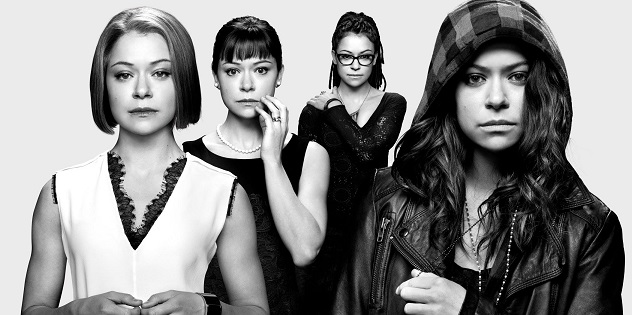 The science fiction in Orphan Black has been highly praised for its realistic depictions of genetic engineering, human cloning, and the ethics behind it all. However, this is not the only true or relevant aspect of the show. Its large cast of female characters are at the heart of the story and this is primarily what makes the series so believable and real. Without the intrusion of dominant male characters to define who they are, these women are portrayed as multidimensional, fully realized individuals who can think and act for themselves–much like women outside your television screen.
Those who have not watched the show and experienced what these women are made of, may, from the outside, see some cliches: Sarah is a punk rock con artist; Alison is a suburban, straight-laced soccer mom; Cosima is a nerdy PhD student; and Helena is a trained murderer with a dark past. Although these stereotypes presumably encapsulate their personalities, there is much more to them than what’s on the surface. And despite them being clones and coming from the same genome, in no way are they exact replicas of each other, unlike the cookie cutter versions of women seen on many other television shows today.
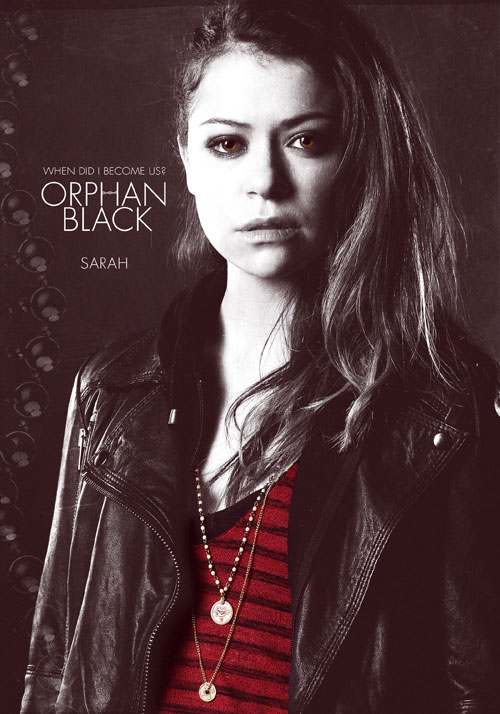 Sarah Manning is the main protagonist and within the first few minutes of her airtime, we see a criminal who’s made a handful of poor choices. However, she is much more than that. She’s a mother, a sister, and part of a bigger and controversial issue that surrounds her and her sister clones. We come to learn that her intentions are not all bad as she will fight tirelessly for her own, and her clone sisters’, freedom and individuality. She could have very easily been put into a box as the punk character constantly doing the wrong thing, needing to be saved. But Sarah doesn’t need anyone to save her because she is fully capable of saving herself. Tatiana Maslany plays the parts of all the clones in the show and because they are all vastly different characters, we constantly see the breadth of Maslany’s talent.
Orphan Black is a show that seeks to portray empowered women and is a genuine celebration of diversity. Although the clones are unalike and come from different backgrounds, they support each other, love each other, and want the best for each other. This can not always be said for other televisions shows that pit woman against woman in meaningless antagonisms, which only reinforce the stereotype that women are overly dramatic. No…in Orphan Black we find a family that works together for their collective happiness.
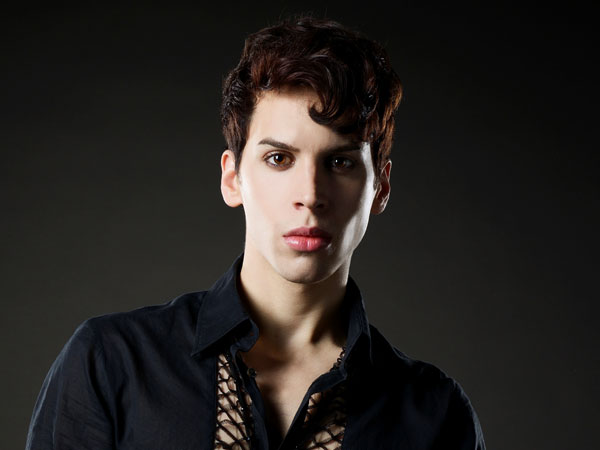 The men in this show are less fully realised: Paul is a secretive man easily distracted by sex; Art is a typical cop; Vic is an abusive drug dealer. They are mostly antagonists, created to get in Sarah and the clones’ way. The only man in the series who is consistently smart, strong, and worth anything is Felix Dawkins (played by Jordan Gavaris), Sarah’s adopted brother. Felix could have easily been written as “the gay comic relief”, but instead was able to transcend the labels and become something more. He’s an integral part of the show, and his sexuality (like Cosima’s) is just seen as another piece of who he is and not a defining characteristic to focus on for either comedic or dramatic purposes.
There’s been some discussion that perhaps Orphan Black goes too far in its poor treatment of male characters. Many believe they are one dimensional in order to make the female characters stronger and more important. And while it does seem like they do spend the majority of their time as set dressing and background filler, that may be less because they are being marginalised and more because they simply aren’t the main focus of the show.
Sarah, her sister-clones, and their stories are what makes this series worth watching. They move the story forward without any man or tragic event to help them develop. Though the fourth season will not be here until next year, you can catch previous episodes on Netflix, DirecTV, and Comcast Xfinity. That way, you won’t have to miss your favourite clones breaking down walls and destroying stereotypes. Although Orphan Black isn’t as well known and watched as Game of Thrones or Orange is the New Black, it is just as worthwhile.



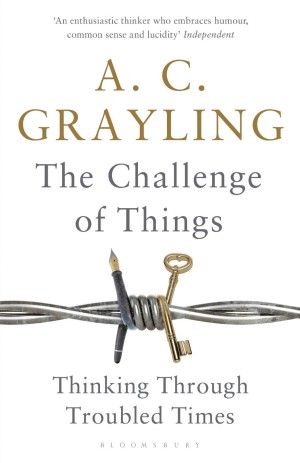 A. C. Grayling, continuing to develop the persona of the public intellectual, has produced a mature set of essays for any person with an interest in the world around them as perceived through the prism of applied philosophy and a discerning mind.
 I’ve been accruing a