Been really tied up with getting Angel Arias finished because the release date was brought forward a month. Now that it’s all done I’m up for air. Time to say hi and see how you’re all going.

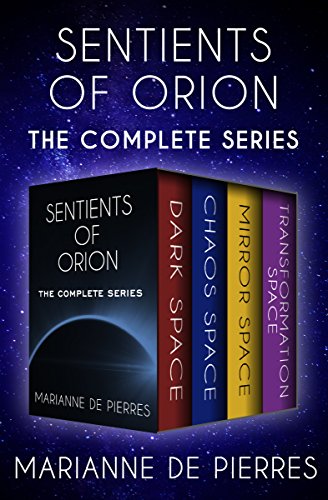
News-wise, the Burn Bright campaign (Publish Burn Bright Worldwide) is gaining momentum with bloggers across the world generously spreading word. Notably, About Happy Books, Strangemore and The Yetzel Library have joined in. Then there are the Facebook communities and the individual tweeters. Thank you all, especially my own team, who tirelessly help share news – including the announcement that Yunyu will release a new song for the Angel Arias which will be available for FREE download via a QR tag in the book.

I’ve finished the rough version of Peacemaker issue 2 but need to go through it and make it ready to send to Brigitte Sutherland. I hope to get to it this week. Issue 2 is twice as long as issue 1 and introduces detective Indira Chance and Caro Jenae, investigative journalist and Virgin’s best friend. I find the comic calls to me constantly (when I’m working on other things), which is always a good sign.

The next two months though, will essentially be Tara Sharp 3 with my October deadline just around the corner. Tara is always a pleasure to spend time with and will make a nice break from Ixion and Grave (Night Creatures trilogy).
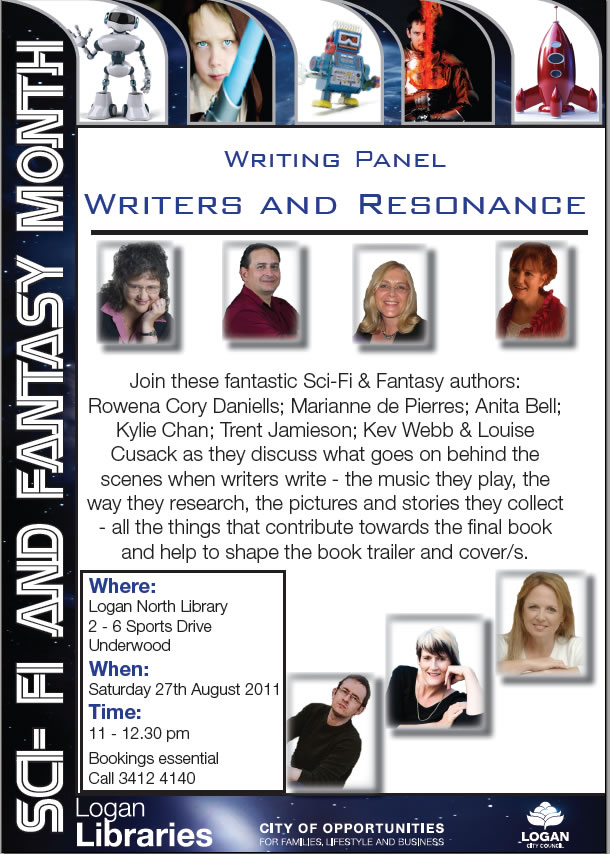
The Event Horizon (skiffy joke there!) is dotted with some upcoming good stuff: Logan Library SF Finale day panel, Gold Coast Literary Luncheon, Brisbane Writers Festival, SheKilda convention and Supanova Brisbane.

Also was fortunate to have a double page profile in the Sunday edition of the Sydney Morning Herald recently. Many thanks to Steve Meacham. Not often a SF writer gets that kind of spread in a major newspaper.

A bunch of my peeps have had some wins lately. I was thrilled to see Angie Slatter and Charles Tan nominated for a World Fantasy Award but am in absolute squee mode now that I know that Alisa Krasnostein at Twelfth Planet Press also has a nom. Alisa and I worked together on on my boutique collection, Glitter Rose and I’m so proud of her, and to be associated with her publishing endeavours (which also includes feminist spec fic podcast Galactic Suburbia).

Whew! Well that was a fair bunch of news. Hope you’re all well. Sending you my shiniest thoughts.


Some news on the comic front!

As of next month issue 1 of Peacemaker will no longer be on special at .99c AUD and will now cost $3.99 AUD.

The good news is that for your money you will also get the short story (approximately 5k words) that the character  is based on and a bunch of concept art from Brigitte Sutherland, along with her commentary, as part of the new price. Although the comic follows a different story line from the original short story, you can see the development of Virgin’s character and the heavy influences of the Australian Outback and spiritual weirdness. Brigitte’s commentary also gives some sneak peaks into my novel in progress.

Issue 2 is in the pipeline and will be double the size of issue 1. It will follow the same pattern of a reduced price initially, and then a package deal with extras when the price increases.

For anyone who has already purchased the comic and would like the short story and concept art extra as well, you can email me via this website and I will arrange it for the price of .99c AUD.

N.B. Many thanks to Tehani Wessely at Fablecroft for making the short story pdf available for me. The story was originally published as “Gin Jackson: Neophyte Ranger” in AGOG Smashing Stories, Cat Sparks (ed.), AGOG! Press, 2004, and later reprinted  as Virgin Jackson in Australas Imaginarium, a Fablecroft publication. Australis Imaginarium is still available for purchase and is full of terrific stories.


Loving this ad created by Brigitte Sutherland (click to enlarge):

And for anyone that would like to catch up for a signing or just to say howdy, I’ll be at this panel in August with a bunch of great authors! See below.


The book blogging community is quite special; switched on, communicative and quite powerful. I didn’t quite realise that until I started writing YA fiction.  Out there in YA-land they’re talking and loving books – and they are respectful of each others’ tastes. I suppose it’s a generational thing, and that younger readers (say 35 and under) are using the social networking platforms that they’ve grown up with, to share their passion. It makes me wish I was younger! How less isolating it would have been for me growing up. How amazing to have been part of such a wide and thriving community. Life would have been so much better.

Anyway, today is a big shout out to Lyndsey at Strangemore who has just begun a campaign to bring Burn Bright (The Night Creatures trilogy) to the US. To all those lovely readers who’ve emailed me asking where they can get the book – CHECK IT OUT!

A second shout out to Krista at Cubicle Blindness who has been single handedly campaigning for the same thing  for a while. You’re not on your own anymore!

And also to ALL those wonderful bloggers who’ve run interviews with me and giveaways of Burn Bright – especially those who have taken it upon themselves to send Burn Bright on a book tour (Nomes at Inkcrush) around the world, so that others may enjoy it. You know who you are!

Lastly, to Braiden at Book Probe, who hosted a blogger kafee klatsch for myself and Alison Goodman and made my YouTube site look pretty.

Image borrowed from A Readers Record.


A 30-year veteran of the entertainment industry, Eric Wiler began his film career in 1981 as a high school intern at ABC affiliate WUHQ channel 41 in Battle Creek, Michigan. College student by day, GM autoworker by night, Eric graduated from Western Michigan University, Kalamazoo, MI., in 1987. Knowing he wanted a career in the entertainment business, he headed to the epi-center Los Angeles, CA and soon landed a marketing position at Hollywood’s oldest studio, Republic Pictures. This led to several television production positions; CBS Beauty and the Beast, NBC The Golden Girls & Empty Nest and ABC mini series Son of the Morning Star. In 1990, he landed an assistant film editor position for Director Arnold Schwarzenegger, Christmas in Connecticut, which led to a string of highly successful films, Muppet Christmas Carol, Muppet Treasure Island, Little Big League, Can’t Hardly Wait and Bullet Proof. Eric spent 5 years in 2000’s serving as the Executive Assistant to the President of Dark Horse Comics, Dark Horse Entertainment shepherding Emmy award-winning indie production company Dark Horse Indie, The Don Rickles Project, Directed by John Landis and Eisner award-winning comic The Umbrella Academy for the studio.   In 2009, he launched his own production company, ericwilerproductions.com, currently developing The Rook and Handbook for Hot Witches comics into film. In 2011, he won a Gold Mom’s Choice Award for Associate Producing Yoga Calm, a yoga DVD for ADD & ADHD children.  Eric currently resides in Portland, Oregon, has a son Dylan and donates his time to various nonprofit organizations, OMPA, young filmmakers boot camp and Oregon Cartoon Institute.


You worked in both comics and film. Where would you say your natural home is, and why?

Film, it’s my true love. When auteurs combine written words with vivid imagery toss in layered aura sound with composed music,
the experience becomes a deeply shared common experience. The medium is intended for a group of people to instantly share in a common experience, at a given place and structured time. It’s a real emotional and physical investment by the audience. Actors bring tremendous depth to characters, many times it’s more than the screenwriter could have ever imagined. The collaborative aspect of filmmaking allows for everyone involved in the production to contribute and bring value to the project. The additional layer of human emotion and audio craftsmanship are not available in comics. Granted, comics and novels are created for the reader’s mind to fill in the layers and are well crafted for the imagination. That’s why we love them so much. It’s our thoughts and our emotions. In general, the common experience is after the fact, when we discuss the material over coffee. It’s a joyful, terrifying and overwhelming experience to test screen your film for an audience. When they laugh at the right spot and tear up at the places you’ve worked so hard to convey, it’s a whole additional level above and beyond for the filmmakers.

What did you take professionally from your years at Dark Horse comics?

The business of storytelling. It was a piece of the puzzle I had not been adverse in. Having a great idea is one thing, but building a profitable entity is another. The company is filled with highly creative and business-minded individuals that deeply care for the integrity of the story and one another. The employees are truly the heart of the organization.  As the leader of licensed comic book properties, I gleaned the ins and outs of intellectual property management and what it takes to compete in the franchised transmedia landscape. I was blessed to learn from many of the best in the business.

Tell us a little about your new production company? What projects do you have on the boil?

ericwilerproductions.com is my new venture.  In 2009 I decided to combine my professional experiences and launch a film company.  It’s a road that most entertainment professionals eventually take, some by choice, some by accident. I’m currently developing copyrighted comic book property in association with the William DuBay estate. William’s works graced the pages of every major comic book publisher since 1969, and he served as the Editor in Chief of Warren publishing for most of the 70’s – early 80’s. In the mid 80’s William launched Marvel animation with Stan Lee, developing the multiple Emmy award-winning The Muppet Babies.  I’m currently pitching his property The Rook.

I’m also working with comic creator Dame Darcy, her new graphic novel Handbook For Hot Witches is being published by Holt in 2012.  This is an exciting female driven project that I think will be become very popular with her fans and non-fans alike.  Dame’s long running comic Meatcake is published by Fantagraphics.

Can you tell us about the Mel Blanc project and how you came to be involved?

I saw it listed in one of the local papers this past January, The Oregon Cartoon Institute was screening archival 16mm prints at a bar in North Portland in anticipation of their upcoming lecture series on Mel Blanc.  I instantly contacted Anne Richardson and Dennis Nyback of the Oregon Cartoon Institute and asked to join.  The Mel Blanc Project partnered with The Oregon Jewish Museum, which launched a Mel Blanc exhibit in June.  It’s been a blast working on the project, Anne and Dennis are the best.  Mel was a musician first and foremost, in the mid 20’s he became the youngest bandleader in America. Mel performed on a local Portland radio show, The Hoot Owls in 1927 and that eventually that led to his own show Cobweb and Nuts, all before becoming the man with a 1000 voices. Mel grew up in downtown Portland and attended the same High School that Simpson’s creator Matt Groening would eventually attend, Lincoln. Check out http://melblancproject.wordpress.com/ for more info.  Our series is finished, but there’s defiantly something in the water here in Portland, the Cartoon Institutes has more talented animators to celebrate in the coming year.

Marcus had completed the latest newsletter which is Peacemaker special. You can download it here:

Marianne de Pierres Newsletter 10.07.2011.

I’ve been deep in edits on Angel Arias (Night Creatures 2) and am having a quick breath before diving down to finish Tara Sharp 3. So apologies if I’ve been a little blog-boring. I have an interesting Super Creatives post for you tomorrow though, and feel free to suggest people you’d like to see interviewed.

I’m speaking at the QUT Alumni tomorrow evening which will be fun and a bit of a break from work, drive kid, sleep.

Webbery news is sparse although I have an upcoming interview at Lyndsey’s Strangemore Blog, and there’s an upcoming review of Peacemaker in Dark Matter fanzine.

Running up that hill
A while back on my blog in a post called ‘Steepness’ I wrote about a workout I sometimes do.  It involves running up a hill with a flight of steps cut in it. It’s a killer workout.  After a few repetitions you either vomit, or almost-vomit (if you start with a completely empty stomach).  It’s a workout that pays huge dividends in terms of physical conditioning. And it’s a workout that I will make many excuses to avoid. (At the moment I’m claiming hayfever).

What I found, briefly, was that if I isolated the hardest part of this hard workout and worked it repetitively, as intervals, I got better rapidly. And the intensity of mental focus that arose out of that isolation work was staggering. It was really remarkable.

I’ve wanted to unpack this in relation to writing for ages, but I couldn’t quite put my finger on what I wanted to say. Then my partner (who trains fighters in his work) started telling me about research in a field called ‘deliberate practice.’

Deliberate practice is a method of improving performance through stretching yourself, making mistakes, and critical self-evaluation while remaining ignited toward your goal. It’s an area of research developed by K. Anders Ericsson centring on sports performers, classical musicians, chess players, and some other professionals. If you want to read more about it, here’s an article. Malcolm Gladwell also wrote about these ideas in Outliers

This is a huge area, but in brief here’s what I’m getting: the essence of deliberate practice is forcing yourself to deal with steepness. It’s a way of increasing the gradient of your learning curve whether you are a beginner or an old-timer. And I would add from my own experience of running the hill that this approach creates a degree of intensity that burns through mental barriers. It’s like putting yourself in the anaerobic threshold zone and staying there even when you think you’re going to die.

But how to apply these sports metaphors to writing? When I first read this stuff about classical musicans practicing like demons I was repelled. I was all like, ‘Oh, but I’m a creative, dude. I’m not gonna do drills. That messes up my flow, like. Yuck.’

I think I said to my partner: ‘But this represents the whole ethos that I ran away from screaming, years ago.’

Then I thought about it a bit more.

Deliberate practice is a set of ideas cultivated around performance, and specifically around performance in areas where success or failure can be clearly defined. So we can run into trouble when we try to apply these methods to creative work. Partly this is because of the definitional marsh surrounding the notion of creative ‘success.’ Success for a classical musician performing a score relies on that musican reaching an agreed standard of what is ‘good’ or’ excellent.’ A basketball player drilling shots knows exactly what he or shy is trying to achieve. Even in the chaotic environment of a game where the player has to deal with teammates, opponents and the unpredictable unfolding of events, at least there is clear feedback that tells her ‘where did I go right?’ and ‘where did I go wrong?’ There are objective criteria to be met.

If you’re a writer you’ve probably already spotted the problem I’m talking about. One reader loves how you did X in a story. Another reader thinks it’s tacky. And so on. Or maybe you look at a bestselling or highly praised book and go, ‘Huh? What’s all the fuss?’ while noticing that critics describe a book you love in pejorative terms. Trying to judge your work (or anybody’s) against an objective standard is impossible. There is no such thing. The whole enterprise is a recipe for crazy sauce.

And yet, we must go on, crazy sauce or no. Personally, my sense is that although trusted readers can encourage you and a good editor is priceless, ultimately you spend most of your time in your own head. You stand or fall on your own judgement. So the decisions about what to work on in your writing have to be yours.

To start with, how can we identify strengths and weaknesses? I have found that the obvious, most foolproof way is to look for the steepness. Look for what is hard. Steer into the wind.

For example, maybe dialogue is hard and you avoid it. OK. If you can identify that, then you can do something about it. You aren’t doomed to write wooden dialogue for the rest of your life. Go read books that have excellent dialogue. Read plays. Watch movies–good movies with good writing, not just movies where stuff blows up. And practice dialogue in isolation. You could try writing a whole story in dialogue, or at least a whole scene.

And this is important: work with the expectation that it will be bad. Don’t let suckage stop you. When you have some product, examine it carefully and conscientiously to identify your failures, correct what you can, and go again. Writing ain’t magic (except when it is, but that’s out of your control so you may as well forget about it). It’s a learning process like any other.

If you look closely, you can find a way to apply deliberate practice to your writing at pretty much every level, from word choice through all the levels of style and structure, right on up to subject matter and work habits. The trick is to isolate problem areas, devise ways of addressing them, then evaluate the result and adjust accordingly. All of these stages are important. You can’t just put in blind mileage; you have to invest in the meta, in the critical examination of your own process. And this never stops.  There is no arrival. That’s what makes it a practice.

And it’s not supposed to be easy. The whole point is to push past your own resistance.

So many times I have thought, ‘I can’t do that. I’m not that sort of writer. I can only do this.’  But the lesson of deliberate practice is that you can be any kind of writer you want to be if you’re prepared to take on the steepness.

My personal bugbear of the moment is endings. I’m famous for starting things, going a certain way, and then starting something else. My hard drive is full of undeveloped and half-developed projects.  I work and work and have no product. So at this moment, I’m forcing myself to finish what I have started. I hate it! It’s not fun. But I’m learning from this. It’s like psychological kettlebells. No pain, no gain.

And look: we’re all human here with all kinds of demands on our time and energy.  We may need to pick our battles carefully, choose wisely where we invest energy. So it’s important to be smart and practice with eyes open as to what specific work will do the most good.

Personally I believe that desire is probably the most important thing, because it’s desire that keeps driving you even when the work is too hard and the road seems too long. So I will leave you with the quote that hangs above the computer in our kitchen:

‘Champions are made from something they have deep inside them, a desire, a dream, a vision.  They have to have last-minute stamina, they have to be a little faster, they have to have the skill and the will.  But the will must be stronger than the skill.’

–Muhammad Ali

Bio:

Tricia Sullivan is a science fiction writer. She also writes fantasy under the pseudonym Valery Leith. She moved to the United Kingdom in 1995. In 1999 she won the Arthur C. Clarke Award for her novel Dreaming in Smoke. Her novel Maul was also shortlisted for the same award in 2004. Sullivan has studied music and martial arts. Her partner is the martial artist Steve Morris, with whom she has three children. They live in Shropshire.


Tehani Wessely reviews Peacemaker at Asif and says,”While the story itself is perhaps a little hard to assess in such a very short first issue (although having read in Virgin’s world before, I guarantee quality plot and characters as the comic progresses!), I could unequivocally recommend this issue on the strength of the artwork alone – Sutherland has produced high quality pictures that tell as much as the dialogue, bringing Virgin to life.

In this new venture, de Pierres has created something special, with a heroine that is already shaping up to be not just tough, but interesting on many levels. I look forward to following Virgin’s adventures in future issues.” Read the full review here.


Many thanks to Joe Gordon at Forbidden Planet UK Blog, The Bibliophile Stalker, Broken Frontier and Trentonomicon for giving Peacemaker a plug. Jamie Marriage gives Peacemaker a video review while Sean the Bookanout gives it a review on his blog.

While I’m talking links, I also had a quick chat with Karen Tyrell about agents over at her website.

An Austin DesignWorks Production