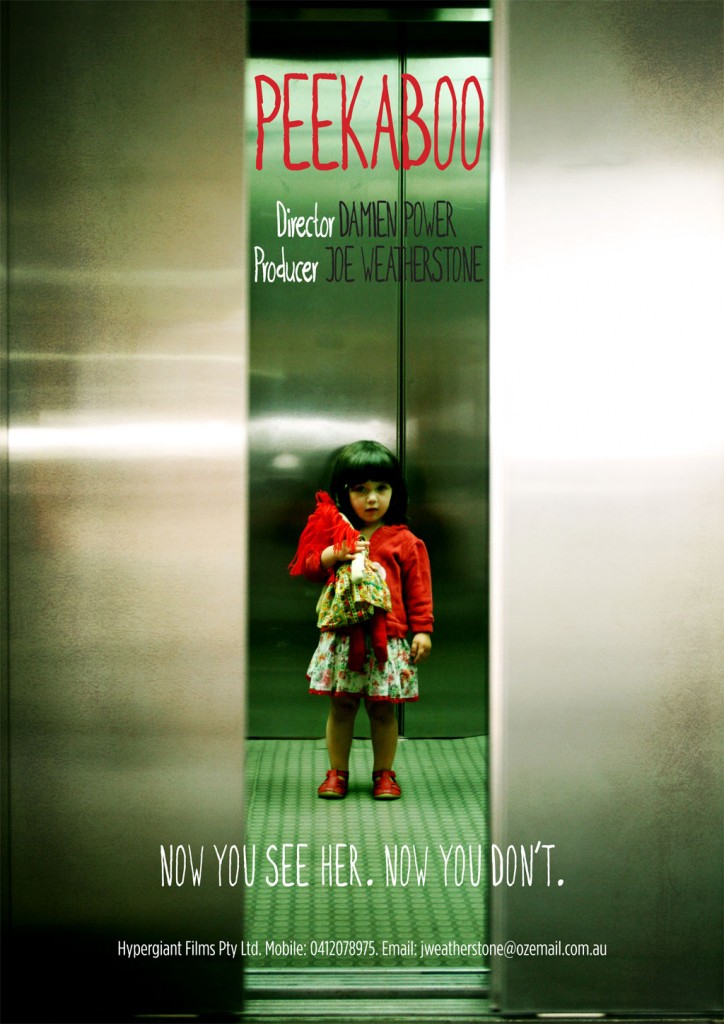
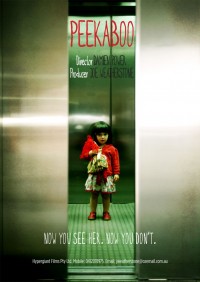
My most excellent roving reporter Rena Nero attended the Peekaboo premiere screening at AFTRS and has sent in this short review:

Peekaboo:

I recently had the pleasure to see a screening of the short film Peekaboo, creation of producer Joe Weatherstone and director Damien Power, as well as meet some of the cast and crew that worked on it. I had no idea what to expect from the film but can say now I’m very glad I was given this opportunity.

Peekaboo is a short film that manages to fit a great deal of impact into a very short amount of time, leaving strong emotions in its wake. It follows a mother and her two young daughters as they return from a fun day out and turns into a mother’s worst nightmare that includes a stranger and a chance encounter. Justine Clarke is wonderful as the mother, Jillian, making every reaction and emotion in this film feel so very genuine and you understand each reaction and thought as if it’s your own. But, in the end, are they the right ones?

Beyond what was on the screen, what made this such a great short film was definitely the creative team behind it. Speaking to crew members after the screening, I got a real sense of love and passion for the project from everyone involved, from the producer and director to those in wardrobe and AV. That passion combined with so much creativity and out-of-the-box thinking (the entire thing was shot in high definition using a Canon 7D SLR instead of a standard video camera) created a film that fits right into our current social mindset and makes you think.

Rena Nero:

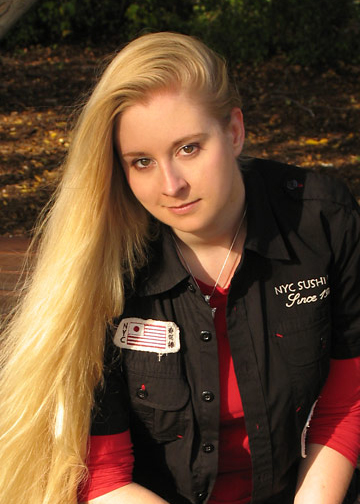
Rena is a Canadian costume designer and photographer who has spent most of the last decade living in Sydney, Australia. She has a background in the theatre, specializing in historical period clothing, and is currently working on the production of her first short film.

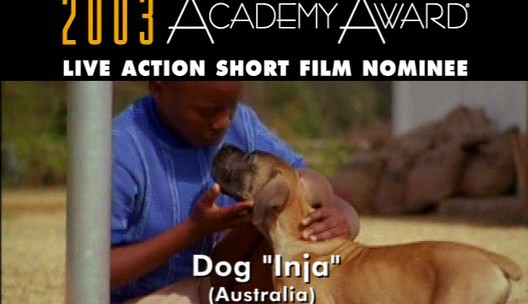
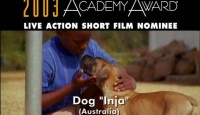
Joe graduated from The Australian Film Television and Radio School (AFTRS) in 2002 specializing in producing.  On graduation she won the Film Finance Corporations creative producer award and in 2003 was nominated for an Academy Award for the live action short film “Inja”.  While at AFTRS she produced 8 short films all of which screened at festivals in Australia and/or overseas.

For the past four years she has been producing half hour comedy: “Pizza Series 5”, “Pizza – Da Vinci Cup”, “Pizza – World Cup” and “Swift and Shift Couriers 1 & 2” broadcast on Network SBS.  In 2008 she spent time developing a Massively Multimedia Online Game (MMO) before returning to Antichocko Productions and comedy.  Joe has several TV, multimedia and feature projects in development.

She is currently in post production on “Houso’s” starring Amanda Keller, Ian Turpie and Paul Fenech.

1. How did you get involved in the film Peekaboo?

Damien Power, the writer/ director of ‘Peekaboo‘, and I have been working together on his feature scripts for almost 6 years – I know this because I was pregnant with my eldest child Jacob when I first met Damien. He is now forever the measure of time. The script I shopped around, Savage, is a very well written, very violent, “Michael Heneke (esk)” feature film.   Difficult to sell at the moment I’m told due to its “bleak” subject matter and body count – what horror/thriller isn’t a little bleak?  The feedback about the script was really good but neither Damien or I had current films circulating and we felt we needed a little heat on us to make a deal happen.  It was also a great opportunity to learn a bit about each other’s work on something small before the long commitment to a feature film. In a nut shell we started making the short film over a year ago to help us fund Savage. And that is what I am doing now… heading out in search of private money.

2. What is your opinion on the current state of the Australia film industry?

The reason I’m looking at only private money says a bit about the state of the industry.  Australian films are not pulling big audiences at the local box office or overseas and they need to make over three times their budgets to see a dollar of profit for the investors.  There have been a couple of films doing well lately but I figure the lower the budget the better for our film. No matter what they say about “the state of the industry” I truly believe it is up to us to defy it – if you have a great story that is right for the current market somebody will back you. My biggest hurdle to date and probably why I haven’t made a first feature –  and I suppose it’s an industry problem –  is the limited pool of screenplay writers who are capable and interested in writing sci-fi, magical realism and high concept “what if” stories.
3. You come from a dynasty of film people, was it inevitable that you became a producer?

I would live anywhere in the world to work on great projects but Australia is an amazing place and I want my children to grow up here.  I was born in the UK to a Scottish mother and Aussie father so who knows where I will end up making films!  My father was a producer and sometimes director; he started in Canberra as a kids show host in the days when it was all live and the ads walked in from the wings of the studio.  He went to England with the equivalent of $200 and eventually got a job working in the BBC, making documentaries all over the world experiencing places remote and unheard of then.

Channel 7 poached him to return to Australia so we left the UK in 1975 and came to Sydney. Dad was a really good people-person and he taught me a lot about work ethic and the joy of life.  He grew up in a poor farming family near Gouldburn so had an amazing love for the land and a creative mind.  When dad lived in the UK he built himself a galvanized iron “den” outside so he could feel at home with the sound of the rain falling. He was always homesick for Australia.  Mum has been here for 35 years now and is still homesick for Scotland!  I tried really hard to be anything but a producer. I tried acting but alas I wasn’t very good at it even though I loved it, and I was naturally drawn to organising other actors so in some ways it was inevitable.  My father died in 1994 and it was soon after this I started listening to his advice and got a real job in production.
4. Tell us about your involvement with the Academy Award nominated short film Inja.

With Inja being nominated for an Oscar, Steve Pasvolsky (director) and I had the experience of a film really connecting with an audience, and there is nothing like it – in any art-form. Being nominated was surreal, unexpected, incredibly exciting and quite scary all at once. And it was a touch ridiculous! I wasn’t really ready to take career advantage of the nomination being straight from film school unfortunately so I spent most of my time stressed that I had to dress up. I like to look like a horse person most of the time, jeans, boots and a tshirt and I had a bit of frock shock.  In true LA style I was taken to a hotel with levels of designers and their dresses, jewellery and shoes.  I sat next to A class actors getting my hair and makeup done feeling like a complete fraud.  They announced the commencement of war while I got my nails painted by a little Thai woman, and on the night our car was checked for bombs as we entered the closed off downtown block.  Steve and I survived the night trembling slightly, surrounded by film royalty and I now feel so incredibly lucky to have experienced it.  I hope it was a trial run because it would mean I have produced more great work!

“Peekaboo” our short film has been great fun and hard work, I can only hope that it now finds an audience to love it too.

Thought it was time for a ‘Writing the Novel’ update. Angel Arias, bk 2 of the Night Creatures trilogy has been an interesting beast. Book 1 centered around the world of Ixion which was darkly glamorous and exciting. Bk 2 is the story of the main character’s return to her home, the sinister and oppressive Grave. There is no velvet and lace and mind altering substances here; it’s more coffins and misery and dangerous underground journeys – an altogether different worldbuilding mindset.

I’ve surprised myself by my choices with it – writing scenes in mausoleums and funeral parlours; my characters having to steal clothes from the dead. Interestingly, not my normal resonances, and yet absolutely right for the story. The process of novel writing is so fascinating in terms of what it reveals to (and about!) the author.

On the PEACEMAKER front, I had a lovely and unexpected email from a descendant of Sam Sixkiller offering some background information for the novel. I was delighted with this and am really looking forward to reading it. The series (2-3 books) is now being looked at by the publisher and I hope to have some news by the end March.

And you can standby for some wonderful news on the Tara Sharp series. Can’t share quite yet, but SOON!

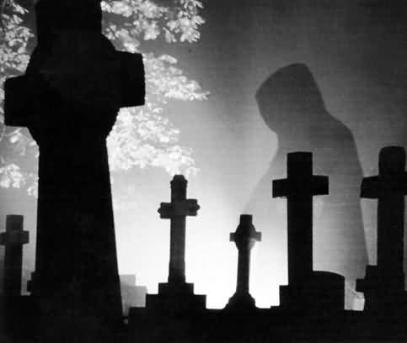
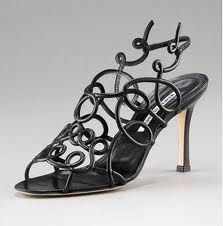
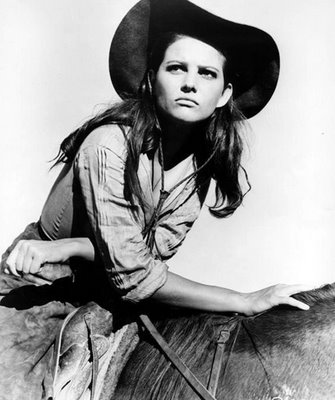
Below are some images that will give you an idea of how my mind is drifting between different kinds of worlds and stories. I LOVE my job.

Angel Arias resonance

Tara Sharp resonance


Peacemaker resonance

‘Well I’ve never played a moon Nazi before.’  Julia Dietze – Iron Sky

The Iron Sky movie has been in my peripheral vision for a while. I’ve seen it mentioned in interweb dispatches, and the producers and publicist were present at Supanova last year. However, the opportunity to go to the press day at Village Roadshow on the Gold Coast brought the whole project into sharp focus for me.

The conception and gestation of this Finnish-German-Australian movie collaboration can be read about here. The key word to understanding it  though is ‘crowdsourcing’. In a donger at the back of the Roadshow allotment, producers Mark and Cathy Overett and Tero Kaukomaa, and Jarmo Puskala, told us anecdotes about how the already solid fan base are providing them with film extras, materials for filming, information on location, and the big one, MONEY. I million Euros of the 6.8 million Euros budget will be fan funded, and it seems the fans are reveling in their participation. At last count their Facebook membership was 33,000 and YouTube followers numbered 60,000. Iron Sky is surfing high on a wave of fan participation. And to that I say, hooray!

To complete the New Media approach, this project runs monthly real time documentaries where they visit the different departments (art, costume etc) and the crew publishes shorter video diaries on a daily basis. Iron Sky will have three prequel comics and a graphic novel of the Iron Sky story created by Gerry Kissell (A Team comic adaption). Then there’ll be the TV novelisation (wish they’d asked me to write it!), and there’s a video game under development for PC. Finally, there’ll be mobile platform content floating around.  (Oh, and in my press kit I scored a rather cool mouse pad!)

Setting aside all the promo and marketing, what was it like? My impression was of a bunch of professionals really enjoying what they were doing. There was an evident camaraderie between the Finnish and Australian contingent and the project appears to be founded on belief and fun. From the look of the trailer (and the amazing steampunk props I caught glimpses of), the production values are punching way above their budget weight. This is a good looking movie in so many ways.

Julia Dietze, one of the lead actors, sparkled her way through question time in the very unglamorous Roadshow tearoom. When asked by someone if she’d been in any other SF films, she answered smartly with, ‘Well I’ve never played a moon Nazi before.’

A trip onto set while they were filming revealed a giant green screen, a bunch of grey-garbed Nazi extras, and what a fabulous evil Fuhrer Udo Kier makes.  Details of the film are under close wraps but they complete filming soon and head into an extended period of post production (12 months) due to the amount of CGI. It’s been a long wait period for the fans, and it’s not over yet. But after my Iron Sky day, I’d lay my money on it being worth it.

This article is also published at (Cool) Shite on the Tube with thanks to Bruce Moyle.

For those of you contemplating e-book self publishing through places like Amazon and Smashwords, you might want to follow Shane Jiraiya Cummings‘ personal journey along this route. Shane has just made eight books (novellas and collections)  available on e-book.

He promises to disclose all the nitty gritty of his experience, including sales figures. The goals he’s set for himself and the costs involved are outlined in this post.

Shane is an Australian horror and dark fantasy author, editor and critic. You can read his extensive bio here.

Twelfth Planet Press have announced the line up for their Twelve Planets series. As you know I’m a big fan of “the little press who can” (publisher of my ss collection Glitter Rose) and am thrilled to be writing the foreword for their first planet – Nightsiders by Sue Isle.

Who Are the Twelve Planets?

Margo Lanagan, Lucy Sussex, Rosaleen Love, Tansy Rayner Roberts, Deborah Biancotti, Kaaron Warren, Cat Sparks, Sue Isle, Kirstyn McDermott, Narrelle M Harris, Thoraiya Dyer, Stephanie Campisi.

Check out the details and how to purchase this smorgasboard of Australian women’s speculative fiction. I’ll be collecting the lot.

By entering the Book Pack category you’re eligible to win my entire collection of novels, autographed of course!

plus Tara Sharp and Parrish Plessis sets, and the Glitter Rose collection!

About Writers on Rafts

Writers on Rafts is an initiative of Queensland Writers Centre and author Rebecca Sparrow to raise money for the Queensland Premier’s Flood Relief Appeal. More than 150 Australian authors have pledged prizes.

  • To enter Writers on Rafts go to http://www.writersonrafts.com
  • Purchase as many tickets as you like in as many categories as you want!
  • Every ticket is one chance to win for a lucky person in every state and territory.
  • Every dollar goes directly to the Queensland Premier’s Flood Relief Appeal to help victims of the Queensland floods.
  • QWC’s goal is to raise $10,000 through Writers On Rafts.
  • We will be conducting the draw on Friday, 25 February.

The initiative is being coordinated by Queensland Writers Centre, but because their own building (the State Library of Queensland) has been affected by flood, they are currently not able to access their offices to answer the phone, so please them email for now.

Am currently dividing my time between Queensland Community Flood Relief and keeping the Angel Arias on track. Please, if you are thinking of making a donation, bring in the things listed on the Facebook page, not general junk from your back room. It wastes the volunteers’ time sorting through half used bottles and empty flowerpots.

In booky news … pleased to say that Genre Flash #5 is available from this link: Genre Flash 5. This is a catalogue of many of the recent genre releases in Australia and is put together by Lindy Cameron. Half way through the document is my article on Writing Across Genres.

Also, a bit of fun for me this week (and you know how I love a bit of fun!). Thanks to Bruce Moyle and (Cool) Shite on the Tube, I’ll be going to the press day on the set of Iron Sky at Warner Brothers on the Gold Coast. I’ll be reporting back on the experience and the movie (which looks awesome – see trailer below) for both MDPWeb and Cool Shite.

My stars must in movie land this week because I also got an invite to the preview screening of producer, Joanne Weatherstone’s new short thriller, Peekaboo. Unfortunately this one’s in Sydney and I can’t get there. However, I’m going to some lengths to secure you insider info. Stand by for a feature on Joanne and a blog about the movie from a MDPWeb representative.

In Praise of Fantasy


For many long years readers of fantasy have happily ignored the way the larger world sneers at their genre. Even writers within the genre of speculative fiction have been critical of the subgenre, fantasy. In his iRoSF article ‘Peter Jackson and the Denial of the Hero,’ M. Garcia quotes China Mieville on epic fantasy:

‘Tolkien is the wen on the arse of fantasy literature. His oeuvre is massive and contagious—you can’t ignore it, so don’t even try. The best you can do is consciously try to lance the boil. And there’s a lot to dislike—his cod-Wagnerian pomposity, his boys-own-adventure glorying in war, his small-minded and reactionary love for hierarchical status-quo’s, his belief in absolute morality that blurs moral and political complexity. …. He wrote that the function of fantasy was ‘consolation’, thereby making it an article of policy that a fantasy writer should mollycoddle the reader (Miéville, PanMacmillan).’

But not everything Mieville has to say about Tolkien is derogatory. In his Socialist Review article, ‘Tolkien’s Middle Earth and Middle England’, he says:

‘Tolkien’s most important contribution by far, and what is at the heart of the real revolution he effected in literature, was his construction of a systematic secondary world. There had been plenty of invented worlds in fantasy before, but they were vague and ad hoc, defined moment to moment by the needs of the story. Tolkien reversed that. He started with the world, plotted it obsessively, delineating its history, geography and mythology before writing the stories. He introduced an extraordinary element of rigour to the genre.’

It was this depth of world building that made readers buy into Middle Earth and it was the promise of adventure based on wondrous myths that kept them reading. In a post for the Australian Literature Review on Fantasy: Why is the genre so popular? I argue that:

‘Whether these (fantasy) stories are set in our world or a secondary world where magical creatures and/or people exist, they all share a common theme: the exploration of the human condition. Even the much maligned medieval/quest fantasies offer their readers the chance to vicariously explore a wondrous world, battle evil and restore justice. Even a lowly Hobbit can change the course of the world by destroying the Ring.

That is the appeal of the tolkienesque fantasy. In our modern world where politicians prove corrupt, large corporations rip off consumers and terrorists kill ordinary people going about their daily lives, the traditional quest fantasy provides an antidote to cynicism. Fantasy, deriving from the word fantastic, exercises our sense of wonder.’

Could there be a back-swing seeking to recognise the power of fantasy? Recently Louise Schwartzkoff wrote a piece for the Sydney Morning Herald titled ‘A sucker for a fantastic story’. She brings up the conundrum many fantasy readers come across when they do a BA in Literature. Some of the books they read are fantasy or science fiction, but the authors brand themselves as literature. She says:

‘Margaret Atwood’s perturbing The Year of the Flood was sold in Australia with a black cover choked with thorny vines. Atwood says the book is not science fiction at all, preferring the more reputable label ‘speculative fiction’. Looking at the storyline – a genetically engineered virus all but wipes out humanity – it is hard to see this as anything but an attempt to protect the book from ‘literary snobbery.’

Similarly, in his article, ‘The fantastic appeal of fantasy’, on the subject of literary snobbism Mark Chadbourn quotes Jo Fletcher, editorial director of fantasy publisher Victor Gollancz.

“For years I have been asking why one of the greatest satirists who ever lived – in this country or any other – is consistently ignored by those who ought to be lionising him. I’m talking about Terry Pratchett, who may have the financial rewards commensurate with his talent – but where are the Booker prizes, or the Whitbreads ? Where are the literary accolades? Whenever he’s interviewed, it’s usually with a faint air of surprise that someone who writes fantasy can be so erudite and funny.”’

Chadbourn goes on to say:

‘Publishers love the genre because it reaches all people – highbrow readers attracted to the skilful writing of M. John Harrison, say, or those simply wanting a well-told adventure story by the best-selling Robert Jordan, men and women in equal measure, young and old.

Received knowledge among non-readers suggests fantasy is simply a case of swords and sorcery or elves and dwarfs. Yes, there is that by the shelf. But the genre really is as broad as the imagination. It contains events on this world and any other world, on this side of life and beyond it. ‘

Four times World Fantasy Award winner, Margo Lanagan brings up the same point in her post The Appeal of Fantasy – Sparklies and  Magic’. She says: ‘I don’t think fantasy stories are any less truthful or complex than naturalistic fiction, or even some forms of non-fiction. What you believe about the world will insist on bubbling up through your confections.’

You can explore discrimination and persecution within the fantasy genre because it frees readers from preconceived prejudices by removing loaded nouns such as Black and Jew, and substituting created nouns for created races.

In her Film Reference article on ‘Fantasy films – Theory and Ideology’ Katherine A Fowkes says.

‘By raising questions about reality and by revealing repressed dreams or wishes, fantasy makes explicit what society rejects or refuses to acknowledge. Indeed, to the extent that it includes the surreal and experimental, fantasy is often explicitly subversive. ‘

The fantasy genre is freeing. Sure it can deliver a rollicking read, which is what I set out to do with the King Rolen’s Kin trilogy. But I was also exploring discrimination and narrow mindedness. In his post ‘Counting Down My 11 Favourite Books of 2010’ Rob

Will Review discusses the trilogy these themes in the trilogy. He says:

‘ …  people came to think that men who love men were indistinguishable from the conspiracy of men hellbent on overthrowing the king. The hatred of gay people and people with Affinity became similarly conflated.

Daniells uses this ingenious conceit to demonstrate how easily people can shift from one hatred to another, collapsing all perceived enemies into a hazily defined external or internal threat.  In another thematically related subplot, Rolen decides to attack one of the Utland territories, even though he doesn’t know precisely which one attacked his kingdom.  One is as good as any other.  This seems to be a reference to George W. Bush’s successful bid to satisfy an American desire for revenge against Afghanistan by attacking Iraq, as well as to the general concept of a scapegoat.  Meanwhile, the concept of people with Affinity and/or homosexual desire needing to hide the truth in order to keep fighting for their king or protecting their country and/or loved ones acts as a fascinating parallel to America’s “Don’t ask, don’t tell” policy, which unfortunately continues to be in effect.’

So there you have it. The fantasy genre can work on several levels. It can deliver a rollicking read. It can deliver that sense of awe and wonder and it can also be quite subversive and in the work of the wonderful Terry Pratchett.

So that is why I write fantasy, because of the versatility of this wonderful genre.

httpv://www.youtube.com/watch?v=0U5uZbt052w

Fantastic effort from volunteers all over Queensland and Victoria helping out on the clean up. Need to stay with it though, because it’s going to take weeks. I’m going to work out a routine of helping and working, because I still have a February deadline for Angel Arias. So far have only been able to help out with the Redlands Council effort.

Was planning to go to one of the mustering points tomorrow but think I’ll go out to Goodna instead. I did an author visit to a primary school out there once and would very much like to help them.

There are some great writing-related fundraisers going on: Writers on Rafts and one being put together by Fleur MacDonald and Kate Gordon.

And on a happier note (for me at least), many thanks to Garth Pendergrast for sending this awesome picture from Borders in Perth.

An Austin DesignWorks Production